


בקשה להפעלת פונקציה, שנקראת גם שימוש בכלי, מספקת למודל LLM הגדרות של כלים חיצוניים (לדוגמה, פונקציית get_current_weather).
כשמעבדים הנחיה, המודל קובע בצורה חכמה אם נדרש כלי. אם כן, הוא מפיק נתונים מוּבְנִים שמציינים את הכלי להפעלה ואת הפרמטרים שלו (לדוגמה, get_current_weather(location='Boston')). לאחר מכן, האפליקציה מפעילה את הכלי הזה, מעבירה את התוצאה בחזרה למודל, וכך המודל יכול להשלים את התגובה שלו עם מידע דינמי מהעולם האמיתי או עם תוצאה של פעולה. הפעולה הזו יוצרת גשר בין מודל ה-LLM לבין המערכות שלכם, ומרחיבה את היכולות שלו.
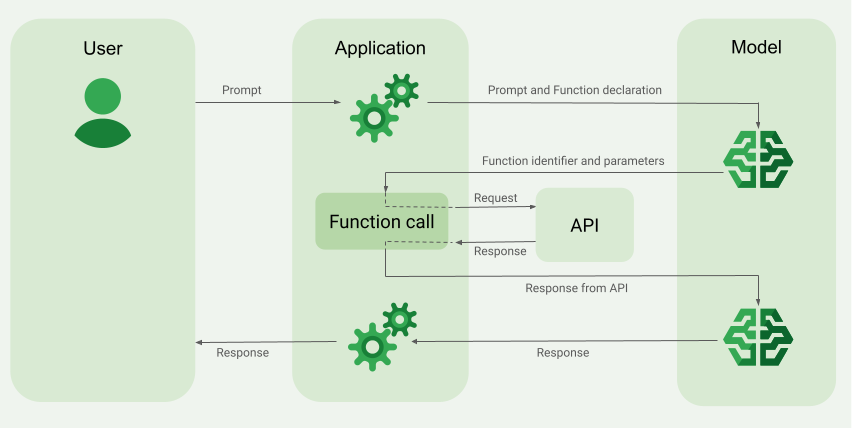
הבקשה להפעלת פונקציה מאפשרת שני תרחישי שימוש עיקריים:
אחזור נתונים: אחזור מידע עדכני לתשובות של המודל, כמו נתוני מזג אוויר עדכניים, המרת מטבעות או נתונים ספציפיים מממשקי API ומאגרי ידע (RAG).
ביצוע פעולה: ביצוע פעולות חיצוניות כמו שליחת טפסים, עדכון מצב האפליקציה או תזמור של תהליכי עבודה מבוססי-סוכן (למשל, העברת שיחות).
דוגמאות נוספות לתרחישי שימוש שמבוססים על קריאה לפונקציות זמינות במאמר תרחישי שימוש.
תכונות ומגבלות
המודלים הבאים תומכים בקריאה לפונקציות:
- המודלים של Gemini:
לחצו כדי להרחיב את רשימת המודלים הנתמכים
מודלים פתוחים:
מגדירים את הפונקציות בתבנית של סכימת OpenAPI.
במודלים של Gemini 3 ואילך, אפשר לכלול תוכן מולטימודאלי (תמונות וקובצי PDF)
functionResponseבהודעות ששולחים בחזרה למודל. מידע נוסף זמין במאמר בנושא תשובות פונקציה מולטימודאליות.במודלים של Gemini 3 ואילך, אפשר להגדיר את
streamFunctionCallArgumentsל-trueב-functionCallingConfigכדי להזרים ארגומנטים של קריאות לפונקציות בזמן שהם נוצרים. מידע נוסף זמין במאמר בנושא העברת ארגומנטים של קריאות לפונקציות בסטרימינג.לשיטות מומלצות שקשורות להצהרות על פונקציות, כולל טיפים לשמות ולתיאורים, אפשר לעיין במאמר שיטות מומלצות.
למודלים פתוחים, פועלים לפי המדריך למשתמש.
איך יוצרים אפליקציה עם קריאות לפונקציות
כדי להשתמש בהפעלת פונקציות, צריך לבצע את המשימות הבאות:
שלב 1: שולחים את ההנחיה ואת ההצהרות על הפונקציות למודל
מצהירים על Tool בפורמט סכימה שתואם לסכימת OpenAPI. מידע נוסף זמין במאמר בנושא דוגמאות לסכימה.
בדוגמאות הבאות מוצגות הנחיה והצהרת פונקציה שנשלחות למודלים של Gemini:
REST
PROJECT_ID=myproject
LOCATION=us-central1
MODEL_ID=gemini-2.5-flash

curl -X POST \
  -H "Authorization: Bearer $(gcloud auth print-access-token)" \
  -H "Content-Type: application/json" \
  https://${LOCATION}-aiplatform.googleapis.com/v1/projects/${PROJECT_ID}/locations/${LOCATION}/publishers/google/models/${MODEL_ID}:generateContent \
  -d '{
    "contents": [{
      "role": "user",
      "parts": [{
        "text": "What is the weather in Boston?"
      }]
    }],
    "tools": [{
      "functionDeclarations": [
        {
          "name": "get_current_weather",
          "description": "Get the current weather in a given location",
          "parameters": {
            "type": "object",
            "properties": {
              "location": {
                "type": "string",
                "description": "The city name of the location for which to get the weather.",
                "default": {
                  "string_value": "Boston, MA"
                }
              }
            },
            "required": [
              "location"
            ]
          }
        }
      ]
    }]
  }'
Google Gen AI SDK ל-Python
from google import genai
from google.genai.types import GenerateContentConfig, Part

# The project and location are passed directly to the client,
# and vertexai=True is added to specify the use of the Agent Platform backend.
client = genai.Client(vertexai=True, project="PROJECT_ID", location="global")

def get_current_weather(location: str) -> str:
  """Returns the current weather.

  Args:
    location: The city and state, e.g. San Francisco, CA
  """
  return 'sunny'

response = client.models.generate_content(
    model="gemini-2.5-flash",
    contents="What is the weather in boston?",
    config=GenerateContentConfig(tools=[get_current_weather]),
)
Agent Platform SDK
אפשר לציין את הסכימה באופן ידני באמצעות מילון Python או באופן אוטומטי באמצעות פונקציית העזר from_func. בדוגמה הבאה אפשר לראות איך מצהירים על פונקציה באופן ידני:
import vertexai
from vertexai.generative_models import (
    Content,
    FunctionDeclaration,
    GenerationConfig,
    GenerativeModel,
    Part,
    Tool,
    ToolConfig
)

# Initialize Agent Platform
# TODO(developer): Update the project
vertexai.init(project="PROJECT_ID", location="us-central1")

# Initialize Gemini model
model = GenerativeModel(model_name="gemini-2.5-flash")

# Manual function declaration
get_current_weather_func = FunctionDeclaration(
    name="get_current_weather",
    description="Get the current weather in a given location",
    # Function parameters are specified in JSON schema format
    parameters={
        "type": "object",
        "properties": {
            "location": {
              "type": "string",
              "description": "The city name of the location for which to get the weather.",
              "default": {
                "string_value": "Boston, MA"
              }
           }
        },
    },
)

response = model.generate_content(
    contents = [
      Content(
        role="user",
          parts=[
              Part.from_text("What is the weather like in Boston?"),
          ],
      )
    ],
    generation_config = GenerationConfig(temperature=0),
    tools = [
      Tool(
        function_declarations=[get_current_weather_func],
      )
    ]
)
אפשר גם להצהיר על הפונקציה באופן אוטומטי באמצעות פונקציית העזר from_func, כמו בדוגמה הבאה:
def get_current_weather(location: str = "Boston, MA"):
  """
  Get the current weather in a given location

  Args:
      location: The city name of the location for which to get the weather.

  """
  # This example uses a mock implementation.
  # You can define a local function or import the requests library to call an API
  return {
    "location": "Boston, MA",
    "temperature": 38,
    "description": "Partly Cloudy",
    "icon": "partly-cloudy",
    "humidity": 65,
    "wind": {
        "speed": 10,
        "direction": "NW"
    }
  }
get_current_weather_func = FunctionDeclaration.from_func(get_current_weather)
Node.js
בדוגמה הזו מוצג תרחיש טקסט עם פונקציה אחת והנחיה אחת.
Node.js
לפני שמנסים את הדוגמה הזו, צריך לפעול לפי Node.jsההוראות להגדרה במאמר מדריך למתחילים של Agent Platform באמצעות ספריות לקוח.
כדי לבצע אימות ב-Agent Platform, צריך להגדיר את Application Default Credentials. מידע נוסף זמין במאמר הגדרת אימות לסביבת פיתוח מקומית.
המשך
בדוגמה הזו מוצג תרחיש טקסט עם פונקציה אחת והנחיה אחת.
מידע נוסף מופיע ב מאמרי העזרה בנושא SDK.
מגדירים משתני סביבה כדי להשתמש ב-Google Gen AI SDK עם Vertex AI:
# Replace the `GOOGLE_CLOUD_PROJECT` and `GOOGLE_CLOUD_LOCATION` values
# with appropriate values for your project.
export GOOGLE_CLOUD_PROJECT=GOOGLE_CLOUD_PROJECT
export GOOGLE_CLOUD_LOCATION=global
export GOOGLE_GENAI_USE_ENTERPRISE=True
C#
בדוגמה הזו מוצג תרחיש טקסט עם פונקציה אחת והנחיה אחת.
C#
לפני שמנסים את הדוגמה הזו, צריך לפעול לפי C#ההוראות להגדרה במאמר מדריך למתחילים של Agent Platform באמצעות ספריות לקוח.
כדי לבצע אימות ב-Agent Platform, צריך להגדיר את Application Default Credentials. מידע נוסף זמין במאמר הגדרת אימות לסביבת פיתוח מקומית.
Java
Java
לפני שמנסים את הדוגמה הזו, צריך לפעול לפי Javaההוראות להגדרה במאמר מדריך למתחילים של Agent Platform באמצעות ספריות לקוח.
כדי לבצע אימות ב-Agent Platform, צריך להגדיר את Application Default Credentials. מידע נוסף זמין במאמר הגדרת אימות לסביבת פיתוח מקומית.
אם המודל קובע שהוא צריך את הפלט של פונקציה מסוימת, התשובה שהאפליקציה מקבלת מהמודל מכילה את שם הפונקציה ואת ערכי הפרמטרים שצריך להפעיל איתם את הפונקציה.
זוהי דוגמה לתשובה של מודל להנחיית המשתמש "מה מזג האוויר בבוסטון?". המודל מציע להפעיל את הפונקציה get_current_weather עם הפרמטר Boston, MA.
candidates {
  content {
    role: "model"
    parts {
      function_call {
        name: "get_current_weather"
        args {
          fields {
            key: "location"
            value {
              string_value: "Boston, MA"
            }
          }
        }
      }
    }
  }
  ...
}
שלב 2: מספקים את פלט ה-API למודל
מפעילים את ה-API החיצוני ומעבירים את הפלט של ה-API בחזרה למודל.
בדוגמה הבאה אנחנו משתמשים בנתונים סינתטיים כדי לדמות מטען ייעודי לתגובה מ-API חיצוני, ושולחים את הפלט בחזרה למודל:
REST
PROJECT_ID=myproject
MODEL_ID=gemini-2.5-flash
LOCATION="us-central1"

curl -X POST \
-H "Authorization: Bearer $(gcloud auth print-access-token)" \
-H "Content-Type: application/json" \
https://${LOCATION}-aiplatform.googleapis.com/v1/projects/${PROJECT_ID}/locations/${LOCATION}/publishers/google/models/${MODEL_ID}:generateContent \
-d '{
"contents": [
{
  "role": "user",
  "parts": {
    "text": "What is the weather in Boston?"
  }
},
{
  "role": "model",
  "parts": [
    {
      "functionCall": {
        "name": "get_current_weather",
        "args": {
          "location": "Boston, MA"
        }
      }
    }
  ]
},
{
  "role": "user",
  "parts": [
    {
      "functionResponse": {
        "name": "get_current_weather",
        "response": {
          "temperature": 20,
          "unit": "C"
        }
      }
    }
  ]
}
],
"tools": [
{
  "function_declarations": [
    {
      "name": "get_current_weather",
      "description": "Get the current weather in a specific location",
      "parameters": {
        "type": "object",
        "properties": {
          "location": {
            "type": "string",
            "description": "The city name of the location for which to get the weather."
          }
        },
        "required": [
          "location"
        ]
      }
    }
  ]
}
]
}'
Agent Platform SDK
function_response_contents = []
function_response_parts = []

# Iterates through the function calls in the response in case there are parallel function call requests
for function_call in response.candidates[0].function_calls:
    print(f"Function call: {function_call.name}")

    # In this example, we'll use synthetic data to simulate a response payload from an external API
    if (function_call.args['location'] == "Boston, MA"):
      api_response = { "location": "Boston, MA", "temperature": 38, "description": "Partly Cloudy" }
    if (function_call.args['location'] == "San Francisco, CA"):
      api_response = { "location": "San Francisco, CA", "temperature": 58, "description": "Sunny" }

    function_response_parts.append(
        Part.from_function_response(
            name=function_call.name,
            response={"contents": api_response}
        )
    )
    # Add the function call response to the contents
    function_response_contents = Content(role="user", parts=function_response_parts)

# Submit the User's prompt, model's response, and API output back to the model
response = model.generate_content(
  [
    Content( # User prompt
      role="user",
      parts=[
          Part.from_text("What is the weather like in Boston?"),
      ],
    ),
    response.candidates[0].content,  # Function call response
    function_response_contents   # API output
  ],
  tools=[
    Tool(
      function_declarations=[get_current_weather_func],
    )
  ],
)
# Get the model summary response
print(response.text)
לשיטות מומלצות שקשורות להפעלת API, כדאי לעיין במאמר שיטות מומלצות – הפעלת API.
אם המודל הציע כמה קריאות מקבילות לפונקציות, האפליקציה צריכה לספק את כל התשובות בחזרה למודל. מידע נוסף זמין במאמר דוגמה לקריאה לפונקציות במקביל.
יכול להיות שהמודל יקבע שהפלט של פונקציה אחרת נחוץ כדי להגיב להנחיה. במקרה הזה, התשובה שהאפליקציה מקבלת מהמודל מכילה שם של פונקציה אחרת וקבוצה אחרת של ערכי פרמטרים.
אם המודל קובע שהתגובה של ה-API מספיקה כדי להגיב להנחיה של המשתמש, הוא יוצר תגובה בשפה טבעית ומחזיר אותה לאפליקציה. במקרה כזה, האפליקציה צריכה להחזיר את התשובה למשתמש. זוהי דוגמה לתשובה בשפה טבעית:
It is currently 38 degrees Fahrenheit in Boston, MA with partly cloudy skies.
בקשה להפעלת פונקציה עם מחשבות
כשמפעילים פונקציות עם ההגדרה thinking, צריך לקבל את thought_signature מאובייקט התשובה של המודל ולהחזיר אותו כששולחים את התוצאה של הפעלת הפונקציה בחזרה למודל. לדוגמה:
Python
# Call the model with function declarations
# ...Generation config, Configure the client, and Define user prompt (No changes)

# Send request with declarations (using a thinking model)
response = client.models.generate_content(
  model="gemini-2.5-flash", config=config, contents=contents)

# See thought signatures
for part in response.candidates[0].content.parts:
  if not part.text:
    continue
  if part.thought and part.thought_signature:
    print("Thought signature:")
    print(part.thought_signature)
לא חובה לצפות בחתימות המחשבה, אבל צריך לשנות את שלב 2 כדי שהן יוחזרו יחד עם תוצאת ההפעלה של הפונקציה, וכך המודל יוכל לשלב את המחשבות בתגובה הסופית שלו:
Python
# Create user friendly response with function result and call the model again
# ...Create a function response part (No change)

# Append thought signatures, function call and result of the function execution to contents
function_call_content = response.candidates[0].content
# Append the model's function call message, which includes thought signatures
contents.append(function_call_content)
contents.append(types.Content(role="user", parts=[function_response_part])) # Append the function response

final_response = client.models.generate_content(
    model="gemini-2.5-flash",
    config=config,
    contents=contents,
)

print(final_response.text)
כשמחזירים חתימות של מחשבות, צריך לפעול לפי ההנחיות הבאות:
- המודל מחזיר חתימות בחלקים אחרים בתשובה, לדוגמה, חלקים של קריאה לפונקציה או טקסט, טקסט או סיכומי מחשבות. להחזיר את כל התשובה עם כל החלקים למודל בתורות הבאות.
- אל תמזגו חלק עם חתימה אחת עם חלק אחר שמכיל גם חתימה. אי אפשר לשרשר חתימות.
- אל תמזגו חלק אחד עם חתימה עם חלק אחר בלי חתימה. כך לא ניתן למקם נכון את המחשבה שמיוצגת על ידי החתימה.
מידע נוסף על מגבלות ושימוש ב'חתימות מחשבה' ועל מודלים של חשיבה
בקשות מקבילות להפעלת פונקציות
להנחיות כמו "קבלת פרטים על מזג האוויר בבוסטון ובסן פרנסיסקו", יכול להיות שהמודל יציע כמה קריאות פונקציה מקבילות. רשימת הדגמים שתומכים בהפעלת פונקציות מקבילה מופיעה כאן.
REST
בדוגמה הזו מוצג תרחיש עם פונקציה אחת של get_current_weather.
ההנחיה למשתמש היא "קבלת פרטי מזג האוויר בבוסטון ובסן פרנסיסקו". המודל מציע שתי קריאות מקבילות לפונקציה get_current_weather: אחת עם הפרמטר Boston והשנייה עם הפרמטר San Francisco.
{
"candidates": [
  {
    "content": {
      "role": "model",
      "parts": [
        {
          "functionCall": {
            "name": "get_current_weather",
            "args": {
              "location": "Boston"
            }
          }
        },
        {
          "functionCall": {
            "name": "get_current_weather",
            "args": {
              "location": "San Francisco"
            }
          }
        }
      ]
    },
    ...
  }
],
...
}
בדוגמה הבאה אפשר לראות איך מספקים למודל את הפלט של הפונקציה. מחליפים את my-project בשם הפרויקט ב- Google Cloud .
בקשה למודל
PROJECT_ID=my-project
MODEL_ID=gemini-2.5-flash
LOCATION="us-central1"
curl -X POST \
-H "Authorization: Bearer $(gcloud auth print-access-token)" \
-H "Content-Type: application/json" \
https://${LOCATION}-aiplatform.googleapis.com/v1/projects/${PROJECT_ID}/locations/${LOCATION}/publishers/google/models/${MODEL_ID}:generateContent \
-d '{
"contents": [
{
  "role": "user",
  "parts": {
    "text": "What is difference in temperature in Boston and San Francisco?"
  }
},
{
  "role": "model",
  "parts": [
    {
      "functionCall": {
        "name": "get_current_weather",
        "args": {
          "location": "Boston"
        }
      }
    },
    {
      "functionCall": {
        "name": "get_current_weather",
        "args": {
          "location": "San Francisco"
        }
      }
    }
  ]
},
{
  "role": "user",
  "parts": [
    {
      "functionResponse": {
        "name": "get_current_weather",
        "response": {
          "temperature": 30.5,
          "unit": "C"
        }
      }
    },
    {
      "functionResponse": {
        "name": "get_current_weather",
        "response": {
          "temperature": 20,
          "unit": "C"
        }
      }
    }
  ]
}
],
"tools": [
{
  "function_declarations": [
    {
      "name": "get_current_weather",
      "description": "Get the current weather in a specific location",
      "parameters": {
        "type": "object",
        "properties": {
          "location": {
            "type": "string",
            "description": "The city name of the location for which to get the weather."
          }
        },
        "required": [
          "location"
        ]
      }
    }
  ]
}
]
}'
התשובה בשפה טבעית שנוצרה על ידי המודל דומה לתשובה הבאה:
תשובה מהמודל
[
{
    "candidates": [
        {
            "content": {
                "parts": [
                    {
                        "text": "The temperature in Boston is 30.5C and the temperature in San Francisco is 20C. The difference is 10.5C. \n"
                    }
                ]
            },
            "finishReason": "STOP",
            ...
        }
    ]
    ...
}
]
Python
בדוגמה הזו מוצג תרחיש עם פונקציה אחת של get_current_weather.
ההנחיה למשתמש היא "What is the weather like in Boston and San Francisco?" (מה מזג האוויר בבוסטון ובסן פרנסיסקו?).
מחליפים את my-project בשם הפרויקט ב- Google Cloud .
import vertexai
from vertexai.generative_models import (
    Content,
    FunctionDeclaration,
    GenerationConfig,
    GenerativeModel,
    Part,
    Tool,
    ToolConfig
)

# Initialize Agent Platform
# TODO(developer): Update the project
vertexai.init(project="my-project", location="us-central1")

# Initialize Gemini model
model = GenerativeModel(model_name="gemini-2.5-flash")

# Manual function declaration
get_current_weather_func = FunctionDeclaration(
    name="get_current_weather",
    description="Get the current weather in a given location",
    # Function parameters are specified in JSON schema format
    parameters={
        "type": "object",
        "properties": {
            "location": {
              "type": "string",
              "description": "The city name of the location for which to get the weather.",
              "default": {
                "string_value": "Boston, MA"
              }
          }
        },
    },
)

response = model.generate_content(
    contents = [
      Content(
        role="user",
          parts=[
              Part.from_text("What is the weather like in Boston and San Francisco?"),
          ],
      )
    ],
    generation_config = GenerationConfig(temperature=0),
    tools = [
      Tool(
        function_declarations=[get_current_weather_func],
      )
    ]
)
בדוגמה הבאה אפשר לראות איך מספקים למודל את הפלט של הפונקציה.
function_response_contents = []
function_response_parts = []

# You can have parallel function call requests for the same function type.
# For example, 'location_to_lat_long("London")' and 'location_to_lat_long("Paris")'
# In that case, collect API responses in parts and send them back to the model

for function_call in response.candidates[0].function_calls:
    print(f"Function call: {function_call.name}")

    # In this example, we'll use synthetic data to simulate a response payload from an external API
    if (function_call.args['location'] == "Boston, MA"):
      api_response = { "location": "Boston, MA", "temperature": 38, "description": "Partly Cloudy" }
    if (function_call.args['location'] == "San Francisco, CA"):
      api_response = { "location": "San Francisco, CA", "temperature": 58, "description": "Sunny" }

    function_response_parts.append(
        Part.from_function_response(
            name=function_call.name,
            response={"contents": api_response}
        )
    )
    # Add the function call response to the contents
    function_response_contents = Content(role="user", parts=function_response_parts)

function_response_contents

response = model.generate_content(
    contents = [
        Content(
        role="user",
          parts=[
              Part.from_text("What is the weather like in Boston and San Francisco?"),
          ],
        ),  # User prompt
        response.candidates[0].content,  # Function call response
        function_response_contents,  # Function response
    ],
    tools = [
      Tool(
        function_declarations=[get_current_weather_func],
      )
    ]
)
# Get the model summary response
print(response.text)
המשך
תשובות פונקציה מולטי-מודאליות
במודלים של Gemini 3 ואילך, אפשר לכלול תוכן מולטימודאלי בחלקים של תגובת הפונקציה ששולחים למודל. המודל יכול לעבד את התוכן הרב-מודאלי הזה בתור הבא כדי לספק תשובה מושכלת יותר. סוגי ה-MIME הבאים נתמכים בתוכן מולטימודאלי בתשובות של פונקציות:
- תמונות:
image/png,image/jpeg,image/webp - מסמכים:
application/pdf,text/plain
כדי לכלול נתונים מרובי-אופנים בתשובה של פונקציה, צריך לכלול אותם כחלק אחד או יותר שמוטמעים בחלק functionResponse. כל חלק מולטימודאלי חייב להכיל inlineData או fileData. אם אתם מפנים לחלק מולטימודאלי מתוך שדה response מובנה, הוא חייב להכיל displayName ייחודי.
אפשר גם להפנות לחלק מולטימודאלי מתוך השדה המובנה response של החלק functionResponse באמצעות פורמט ההפניה של JSON {"$ref": "<displayName>"}. המודל מחליף את ההפניה בתוכן מולטימודאלי במהלך עיבוד התשובה. אפשר להפנות לכל displayName רק פעם אחת בשדה המובנה response.
בדוגמה הבאה מוצגת הודעה שמכילה functionResponse לפונקציה בשם get_image וחלק מוטמע שמכיל נתוני תמונה. השדה
functionResponse's response מפנה לחלק התמונה הזה:
Python
from google import genai
from google.genai import types

client = genai.Client()

# This is a manual, two turn multimodal function calling workflow:

# 1. Define the function tool
get_image_declaration = types.FunctionDeclaration(
  name="get_image",
  description="Retrieves the image file reference for a specific order item.",
  parameters={
      "type": "object",
      "properties": {
          "item_name": {
              "type": "string",
              "description": "The name or description of the item ordered (e.g., 'green shirt')."
          }
      },
      "required": ["item_name"],
  },
)
tool_config = types.Tool(function_declarations=[get_image_declaration])

# 2. Send a message that triggers the tool
prompt = "Show me the green shirt I ordered last month."
response_1 = client.models.generate_content(
  model="gemini-3.5-flash",
  contents=[prompt],
  config=types.GenerateContentConfig(
      tools=[tool_config],
  )
)

# 3. Handle the function call
function_call = response_1.function_calls[0]
requested_item = function_call.args["item_name"]
print(f"Model wants to call: {function_call.name}")

# Execute your tool (e.g., call an API)
# (This is a mock response for the example)
print(f"Calling external tool for: {requested_item}")

function_response_data = {
  "image_ref": {"$ref": "dress.jpg"},
}

function_response_multimodal_data = types.FunctionResponsePart(
  file_data=types.FunctionResponseFileData(
    mime_type="image/png",
    display_name="dress.jpg",
    file_uri="gs://cloud-samples-data/generative-ai/image/dress.jpg",
  )
)

# 4. Send the tool's result back
# Append this turn's messages to history for a final response.
history = [
  types.Content(role="user", parts=[types.Part(text=prompt)]),
  response_1.candidates[0].content,
  types.Content(
    role="tool",
    parts=[
        types.Part.from_function_response(
          name=function_call.name,
          response=function_response_data,
          parts=[function_response_multimodal_data]
        )
    ],
  )
]

response_2 = client.models.generate_content(
  model="gemini-3.5-flash",
  contents=history,
  config=types.GenerateContentConfig(
      tools=[tool_config],
      thinking_config=types.ThinkingConfig(include_thoughts=True)
  ),
)

print(f"\nFinal model response: {response_2.text}")
REST
"contents": [
  ...,
  {
    "role": "user",
    "parts": [
      {
        "functionResponse": {
          "name": "get_image",
          "response": {
            "image_ref": {
              "$ref": "wakeupcat.jpg"
            }
          },
          "parts": [
            {
              "fileData": {
                "displayName": "wakeupcat.jpg",
                "mimeType": "image/jpeg",
                "fileUri": "gs://cloud-samples-data/vision/label/wakeupcat.jpg"
              }
            }
          ]
        }
      }
    ]
  }
]
העברת ארגומנטים של פונקציות בסטרימינג
במודלים של Gemini 3 ואילך, אתם יכולים לבקש שהארגומנטים של קריאות לפונקציות יועברו בסטרימינג בזמן שהם נוצרים על ידי המודל, במקום לחכות ליצירה של כל הארגומנטים. השיטה הזו שימושית כשצריך לקרוא לפונקציות, כדי לצמצם את זמן האחזור שנתפס.
יש לתכונה הזו את המגבלות הבאות:
- התכונה הזו זמינה בגרסאות API
v1ו-v1beta1.
כדי להפעיל את שידור הארגומנטים של קריאות לפונקציות, מגדירים את streamFunctionCallArguments ל-true בתוך toolConfig.functionCallingConfig כשקוראים ל-streamGenerateContent.
כשהאפשרות streamFunctionCallArguments מופעלת, תשובות ביניים יכילו אובייקט functionCall עם השדות partialArgs ו-willContinue.
המאפיין partialArgs מכיל קטעי ארגומנטים כשהם נוצרים, והמאפיין willContinue מציין אם צפויים עוד קטעים לקריאה לפונקציה.
-
partialArgs: מערך שלPartialArgאובייקטים, שכל אחד מהם מכיל:-
jsonPath: מחרוזת JSONPath שמציינת את הנתיב לקטע הזה באובייקט הפרמטרים של הפונקציה. הנתיב יכול להצביע על ארגומנט (למשל$.location) או על רכיב בתוך ארגומנט אם הארגומנט הוא אובייקט (למשל$.location.latitude). - ערך לקטע, שיכול להיות
numberValue,stringValue,boolValueאוnullValue. -
willContinue: ערך בוליאני באובייקטpartialArgs. השדה הזה הואtrueרק עבור קטעיstringValueכשערך המחרוזת מועבר בסטרימינג בחלקים, וצפויים עוד חלקים לארגומנט הזה.
-
-
willContinue: ערך בוליאני באובייקטfunctionCall. אם צפויות עוד תגובות מוזרמות עבור קריאת הפונקציה הכוללת בתגובות מוזרמות עוקבות.truepartialArgsאם הערך הואfalseאו אם הוא לא מופיע, זהו הסטרימינג הסופי של התשובה עבור הקריאה הנוכחית לפונקציה.
בדוגמה הבאה מוצגת רצף של נתונים בחלקים שמועברים בסטרימינג generateContent שבהם הארגומנטים של קריאה יחידה לפונקציה מועברים בסטרימינג:
{
  "parts": [
    {
      "functionCall": {
        "name": "controlLight",
        "partialArgs": [
          {
            "jsonPath": "$.brightness",
            "numberValue": 50
          }
        ],
        "willContinue": true
      }
    }
  ],
  "role": "model"
}
{
  "parts": [
    {
      "functionCall": {
        "partialArgs": [
          {
            "jsonPath": "$.colorTemperature",
            "stringValue": "warm",
            "willContinue": true
          }
        ],
        "willContinue": true
      }
    }
  ],
  "role": "model"
}
{
  "parts": [
    {
      "functionCall": {
        "partialArgs": [
          {
            "jsonPath": "$.colorTemperature"
          }
        ],
        "willContinue": true
      }
    }
  ],
  "role": "model"
}
{
  "parts": [
    {
      "functionCall": {}
    }
  ],
  "role": "model"
}
בדוגמה הבאה מוצג אופן הזרמת הארגומנטים לקריאות מקבילות לפונקציות בתגובות שונות להנחיה 'מה ההבדל בטמפרטורה בין ניו דלהי לסן פרנסיסקו?':
{
  "candidates": [{
    "content": {
      "role": "model",
      "parts": [{
        "functionCall": {
          "name": "get_current_weather",
          "willContinue": true
        },
      }]
    }
  }],
}
{
  "candidates": [{
    "content": {
      "role": "model",
      "parts": [{
        "functionCall": {
          "partialArgs": [{
            "jsonPath": "$.location",
            "stringValue": "New Delhi",
            "willContinue": true
          }],
          "willContinue": true
        }
      }]
    }
  }],
}
{
  "candidates": [{
    "content": {
      "role": "model",
      "parts": [{
        "functionCall": {
          "partialArgs": [{
            "jsonPath": "$.location",
            "stringValue": ""
          }],
          "willContinue": true
        }
      }]
    }
  }],
}
{
  "candidates": [{
    "content": {
      "role": "model",
      "parts": [{
        "functionCall": {
        }
      }]
    }
  }],
}
{
  "candidates": [{
    "content": {
      "role": "model",
      "parts": [{
        "functionCall": {
          "name": "get_current_weather",
          "willContinue": true
        },
      }]
    }
  }],
}
{
  "candidates": [{
    "content": {
      "role": "model",
      "parts": [{
        "functionCall": {
          "partialArgs": [{
            "jsonPath": "$.location",
            "stringValue": "San Francisco",
            "willContinue": true
          }],
          "willContinue": true
        }
      }]
    }
  }],
}
{
  "candidates": [{
    "content": {
      "role": "model",
      "parts": [{
        "functionCall": {
          "partialArgs": [{
            "jsonPath": "$.location",
            "stringValue": ""
          }],
          "willContinue": true
        }
      }]
    }
  }],
}
{
  "candidates": [{
    "content": {
      "role": "model",
      "parts": [{
        "functionCall": {
        }
      }]
    }
  }],
}
Python
from google import genai
from google.genai import types

client = genai.Client()

get_weather_declaration = types.FunctionDeclaration(
  name="get_weather",
  description="Gets the current weather temperature for a given location.",
  parameters={
      "type": "object",
      "properties": {"location": {"type": "string"}},
      "required": ["location"],
  },
)
get_weather_tool = types.Tool(function_declarations=[get_weather_declaration])

for chunk in client.models.generate_content_stream(
  model="gemini-3.5-flash",
  contents="What's the weather in London and New York?",
  config=types.GenerateContentConfig(
      tools=[get_weather_tool],
      tool_config = types.ToolConfig(
          function_calling_config=types.FunctionCallingConfig(
              mode=types.FunctionCallingConfigMode.AUTO,
              stream_function_call_arguments=True,
          )
      ),
  ),
):
  function_call = chunk.function_calls[0]
  if function_call and function_call.name:
      print(f"{function_call.name}")
      print(f"will_continue={function_call.will_continue}")
מצבים של בקשה להפעלת פונקציה
אתם יכולים לקבוע איך המודל ישתמש בכלים שסופקו (הצהרות פונקציות) על ידי הגדרת המצב בתוך function_calling_config.
| מצב | תיאור |
|---|---|
AUTO |
התנהגות ברירת המחדל של המודל. המודל מחליט אם לחזות קריאות לפונקציות או להגיב בשפה טבעית על סמך ההקשר. זהו המצב הגמיש ביותר, והוא מומלץ לרוב התרחישים. |
VALIDATED |
המודל מוגבל לחיזוי של קריאות לפונקציות או של שפה טבעית, והוא מוודא שהסכימה של הפונקציה תואמת. אם לא מספקים את allowed_function_names, המודל בוחר מתוך כל הצהרות הפונקציות הזמינות. אם מסופק allowed_function_names, המודל בוחר מתוך קבוצת הפונקציות המותרות. החל מ-Gemini 3, המצב הזה גם אוכף את הנוכחות של פרמטרים נדרשים. |
ANY |
המודל מוגבל כך שתמיד יחזיר קריאה אחת או יותר לפונקציה, ומוודא שהסכימה של הפונקציה תקינה. אם לא מספקים את allowed_function_names, המודל בוחר מתוך כל הצהרות הפונקציות הזמינות. אם מסופק allowed_function_names, המודל בוחר מתוך קבוצת הפונקציות המותרות. משתמשים במצב הזה כשצריך לקבל תשובה לקריאה לפונקציה לכל הנחיה (אם רלוונטי). |
NONE |
אסור למודל להשתמש בפונקציות. זה שווה ערך לשליחת בקשה ללא הצהרות פונקציה. אפשר להשתמש במצב הזה כדי להשבית זמנית את השימוש בפונקציות בלי להסיר את ההגדרות של הכלים. |
בקשה להפעלת פונקציה
במקום לאפשר למודל לבחור בין תגובה בשפה טבעית לבין קריאה לפונקציה, אפשר לחייב אותו לחזות רק קריאות לפונקציה. התכונה הזו נקראת קריאה לפונקציה בכפייה. אפשר גם לספק למודל קבוצה מלאה של הצהרות על פונקציות, אבל להגביל את התגובות שלו לקבוצת משנה של הפונקציות האלה.
בדוגמה הבאה, המודל נאלץ לחזות רק קריאות לפונקציה get_weather.
Python
response = model.generate_content(
    contents = [
      Content(
        role="user",
          parts=[
              Part.from_text("What is the weather like in Boston?"),
          ],
      )
    ],
    generation_config = GenerationConfig(temperature=0),
    tools = [
      Tool(
        function_declarations=[get_weather_func, some_other_function],
      )
    ],
    tool_config=ToolConfig(
        function_calling_config=ToolConfig.FunctionCallingConfig(
            # ANY mode forces the model to predict only function calls
            mode=ToolConfig.FunctionCallingConfig.Mode.ANY,
            # Allowed function calls to predict when the mode is ANY. If empty, any of
            # the provided function calls will be predicted.
            allowed_function_names=["get_weather"],
        )
    )
)
דוגמאות לסכימת פונקציות
הצהרות הפונקציות תואמות לסכימת OpenAPI. אנחנו תומכים במאפיינים הבאים: type, nullable, required, format, description, properties, items, enum, anyOf, $ref ו-$defs. אין תמיכה במאפיינים הנותרים.
פונקציה עם פרמטרים של אובייקט ומערך
בדוגמה הבאה נעשה שימוש במילון Python כדי להצהיר על פונקציה שמקבלת פרמטרים של אובייקט וגם של מערך:
extract_sale_records_func = FunctionDeclaration(
  name="extract_sale_records",
  description="Extract sale records from a document.",
  parameters={
      "type": "object",
      "properties": {
          "records": {
              "type": "array",
              "description": "A list of sale records",
              "items": {
                  "description": "Data for a sale record",
                  "type": "object",
                  "properties": {
                      "id": {"type": "integer", "description": "The unique id of the sale."},
                      "date": {"type": "string", "description": "Date of the sale, in the format of MMDDYY, e.g., 031023"},
                      "total_amount": {"type": "number", "description": "The total amount of the sale."},
                      "customer_name": {"type": "string", "description": "The name of the customer, including first name and last name."},
                      "customer_contact": {"type": "string", "description": "The phone number of the customer, e.g., 650-123-4567."},
                  },
                  "required": ["id", "date", "total_amount"],
              },
          },
      },
      "required": ["records"],
  },
)
פונקציה עם פרמטר מניה
בדוגמה הבאה נעשה שימוש במילון Python כדי להצהיר על פונקציה שמקבלת פרמטר של מספר שלם enum:
set_status_func = FunctionDeclaration(
  name="set_status",
  description="set a ticket's status field",
  # Function parameters are specified in JSON schema format
  parameters={
      "type": "object",
      "properties": {
        "status": {
          "type": "integer",
          "enum": [ "10", "20", "30" ],   # Provide integer (or any other type) values as strings.
        }
      },
  },
)
פונקציה עם ref ו-def
ההצהרה הבאה של פונקציית JSON משתמשת במאפיינים ref ו-defs:
{
  "contents": ...,
  "tools": [
    {
      "function_declarations": [
        {
          "name": "get_customer",
          "description": "Search for a customer by name",
          "parameters": {
            "type": "object",
            "properties": {
              "first_name": { "ref": "#/defs/name" },
              "last_name": { "ref": "#/defs/name" }
            },
            "defs": {
              "name": { "type": "string" }
            }
          }
        }
      ]
    }
  ]
}
הערות שימוש:
- בניגוד לסכימת OpenAPI, צריך לציין את
refואתdefsבלי הסמל$. -
refחייב להתייחס לצאצא ישיר שלdefs; אסור להשתמש בהפניות חיצוניות. - העומק המקסימלי של סכימה מקוננת הוא 32.
- עומק הרקורסיה ב-
defs(הפניה עצמית) מוגבל לשנייה.
from_func עם פרמטר מערך
בדוגמת קוד הבאה מוצהרת פונקציה שמכפילה מערך של מספרים ומשתמשת ב-from_func כדי ליצור את סכימת FunctionDeclaration.
from typing import List

# Define a function. Could be a local function or you can import the requests library to call an API
def multiply_numbers(numbers: List[int] = [1, 1]) -> int:
  """
  Calculates the product of all numbers in an array.

  Args:
      numbers: An array of numbers to be multiplied.

  Returns:
      The product of all the numbers. If the array is empty, returns 1.
  """

  if not numbers:  # Handle empty array
      return 1

  product = 1
  for num in numbers:
      product *= num

  return product

multiply_number_func = FunctionDeclaration.from_func(multiply_numbers)

"""
multiply_number_func contains the following schema:

{'name': 'multiply_numbers',
  'description': 'Calculates the product of all numbers in an array.',
  'parameters': {'properties': {'numbers': {'items': {'type': 'INTEGER'},
    'description': 'list of numbers',
    'default': [1.0, 1.0],
    'title': 'Numbers',
    'type': 'ARRAY'}},
  'description': 'Calculates the product of all numbers in an array.',
  'title': 'multiply_numbers',
  'property_ordering': ['numbers'],
  'type': 'OBJECT'}}
"""
שיטות מומלצות להפעלת פונקציות
כדי לשפר את התוצאות כשמשתמשים בהפעלת פונקציות, כדאי לפעול לפי השיטות המומלצות האלה:
לכתוב שמות ברורים ומפורטים של פונקציות, תיאורים של פרמטרים והוראות
שמות של פונקציות צריכים להתחיל באות או בקו תחתון, ולהכיל רק את התווים a-z, A-Z, 0-9, קווים תחתונים, נקודות או מקפים, באורך מקסימלי של 64 תווים.
חשוב לנסח את התיאורים של הפונקציות והפרמטרים בצורה ברורה ומפורטת. המודל מסתמך על הנתונים האלה כדי לבחור את הפונקציה הנכונה ולספק ארגומנטים מתאימים. לדוגמה, לפונקציה
book_flight_ticketיכול להיות התיאורbook flight tickets after confirming users' specific requirements, such as time, departure, destination, party size and preferred airline
שימוש בפרמטרים עם הקלדה חזקה
אם ערכי הפרמטרים הם מתוך קבוצה סופית, מוסיפים שדה enum במקום להוסיף את קבוצת הערכים לתיאור. אם ערך הפרמטר הוא תמיד מספר שלם, צריך להגדיר את הסוג כ-integer ולא כ-number.
בחירת כלי
המודל יכול להשתמש בכל מספר של כלים, אבל אם מספקים לו יותר מדי כלים, גדל הסיכון שהוא יבחר בכלי לא מתאים או לא אופטימלי. כדי להשיג את התוצאות הטובות ביותר, מומלץ לספק רק את הכלים הרלוונטיים להקשר או למשימה, ובאופן אידיאלי להגביל את הסט הפעיל ל-10 עד 20 כלים לכל היותר. אם יש לכם מספר גדול של כלים, כדאי לשקול בחירה דינמית של כלים על סמך הקשר של השיחה.
אם תספקו כלים גנריים ברמה נמוכה (כמו bash), יכול להיות שהמודל ישתמש בכלי לעיתים קרובות יותר, אבל עם פחות דיוק. אם תספקו כלי ספציפי ברמה גבוהה (כמו get_weather), המודל יוכל להשתמש בכלי בצורה מדויקת יותר, אבל יכול להיות שהוא לא ישתמש בו לעיתים קרובות.
שימוש בהוראות המערכת
כשמשתמשים בפונקציות עם פרמטרים של תאריך, שעה או מיקום, צריך לכלול בהוראות המערכת את התאריך הנוכחי, השעה הנוכחית או פרטי המיקום הרלוונטיים (למשל עיר ומדינה). כך המודל מקבל את ההקשר הדרוש כדי לעבד את הבקשה בצורה מדויקת, גם אם ההנחיה של המשתמש לא כוללת פרטים.
הנדסת פרומפטים
כדי לקבל את התוצאות הטובות ביותר, כדאי להוסיף לפני הפרומפט למשתמש את הפרטים הבאים:
- הקשר נוסף למודל – לדוגמה,
You are a flight API assistant to help with searching flights based on user preferences. - פרטים או הוראות לגבי אופן השימוש בפונקציות ומתי להשתמש בהן – לדוגמה,
Don't make assumptions on the departure or destination airports. Always use a future date for the departure or destination time. - הוראות לשאילת שאלות הבהרה אם השאילתות של המשתמש לא ברורות – לדוגמה,
Ask clarifying questions if not enough information is available.
שימוש בהגדרות של יצירת תמונות
לפרמטר הטמפרטורה, משתמשים בערך 0 או בערך נמוך אחר. ההנחיה הזו גורמת למודל ליצור תוצאות עם רמת סמך גבוהה יותר ומפחיתה הזיות.
שימוש בפלט מובנה
אפשר להשתמש בהפעלת פונקציות יחד עם פלט מובנה כדי שהמודל תמיד יחזה הפעלות של פונקציות או פלט שמתאים לסכימה ספציפית. כך תקבלו תשובות בפורמט עקבי כשהמודל לא יוצר הפעלות של פונקציות.
אימות הקריאה ל-API
אם המודל מציע הפעלה של פונקציה שתשלח הזמנה, תעדכן מסד נתונים או תגרום לתוצאות משמעותיות אחרות, צריך לאמת את קריאת הפונקציה עם המשתמש לפני שמבצעים אותה.
שימוש בחתימות מחשבה
כדי לקבל את התוצאות הכי טובות, תמיד צריך להשתמש בחתימות מחשבה עם קריאות לפונקציות.
תמחור
התמחור של שימוש בפונקציות מבוסס על מספר התווים בקלט ובפלט של הטקסט. מידע נוסף זמין במאמר בנושא תמחור של פלטפורמת הסוכנים של Gemini Enterprise.
במקרה הזה, קלט טקסט (פרומפט) מתייחס לפרומפט של המשתמש בתור הנוכחי של השיחה, להצהרות הפונקציה בתור הנוכחי של השיחה ולהיסטוריית השיחה. היסטוריית השיחה כוללת את השאילתות, הקריאות לפונקציות והתשובות לפונקציות של תורות קודמות בשיחה. ב-Gemini Enterprise Agent Platform, היסטוריית השיחות נחתכת אחרי 32,000 תווים.
פלט טקסט (תשובה) מתייחס לקריאות לפונקציות ולתשובות הטקסטואליות של תור השיחה הנוכחי.
תרחישים לדוגמה לשימוש בהפעלת פונקציות
אפשר להשתמש בהפעלת פונקציות למשימות הבאות:
| תרחיש לדוגמה | תיאור לדוגמה | קישור לדוגמה |
|---|---|---|
| שילוב עם ממשקי API חיצוניים | קבלת מידע על מזג האוויר באמצעות API מטאורולוגי | מדריך בנושא נוטבוק |
| המרת כתובות לקואורדינטות של קו רוחב/אורך | מדריך בנושא נוטבוק | |
| המרת מטבעות באמצעות API של שער חליפין | Codelab | |
| יצירת צ'אט בוטים מתקדמים | לענות על שאלות של לקוחות לגבי מוצרים ושירותים | מדריך בנושא נוטבוק |
| יצירת עוזר וירטואלי שיענה על שאלות לגבי חברות בנושאי פיננסים וחדשות | מדריך בנושא נוטבוק | |
| מבנה ושליטה בבקשות להפעלת פונקציות | חילוץ ישויות מובְנות מנתוני יומן גולמיים | מדריך בנושא נוטבוק |
| שליפת פרמטר אחד או יותר מקלט של משתמש | מדריך בנושא נוטבוק | |
| טיפול ברשימות ובמבני נתונים מקוננים בקריאות לפונקציות | מדריך בנושא נוטבוק | |
| איך מטפלים בהתנהגות של קריאה להפעלת פונקציות | טיפול בתגובות ובקריאות לפונקציות מקבילות | מדריך בנושא נוטבוק |
| ניהול הפונקציות שהמודל יכול להפעיל ומתי | מדריך בנושא נוטבוק | |
| שליחת שאילתות למסדי נתונים בשפה טבעית | המרת שאלות בשפה טבעית לשאילתות SQL ל-BigQuery | אפליקציה לדוגמה |
| בקשה להפעלת פונקציה מולטי-מודאלית | שימוש בתמונות, בסרטונים, באודיו ובקובצי PDF כקלט להפעלת קריאות לפונקציות | מדריך בנושא נוטבוק |
הנה עוד כמה תרחישי שימוש:
פרשנות של פקודות קוליות: יצירת פונקציות שתואמות למשימות שמתבצעות ברכב. לדוגמה, אתם יכולים ליצור פונקציות שמפעילות את הרדיו או את המזגן. שולחים למודל קובצי אודיו של פקודות קוליות של המשתמש, ומבקשים מהמודל להמיר את האודיו לטקסט ולזהות את הפונקציה שהמשתמש רוצה להפעיל.
אוטומציה של תהליכי עבודה על סמך טריגרים סביבתיים: יצירת פונקציות שמייצגות תהליכים שאפשר לבצע להם אוטומציה. מספקים למודל נתונים מחיישנים סביבתיים ומבקשים ממנו לנתח ולעבד את הנתונים כדי לקבוע אם צריך להפעיל אחד או יותר מהתהליכי העבודה. לדוגמה, מודל יכול לעבד נתוני טמפרטורה במחסן ולבחור להפעיל פונקציית ממטרה.
הקצאה אוטומטית של כרטיסי תמיכה: מספקים למודל כרטיסי תמיכה, יומנים וכללים שמותאמים להקשר. תבקש מהמודל לעבד את כל המידע הזה כדי לקבוע למי צריך להקצות את הכרטיס. קוראים לפונקציה כדי להקצות את הכרטיס לאדם שהמודל הציע.
אחזור מידע ממאגר ידע: יצירת פונקציות לאחזור מאמרים אקדמיים בנושא מסוים וסיכומם. הפעלת המודל כדי שיענה על שאלות בנושאים אקדמיים ויספק ציטוטים לתשובות שלו.
המאמרים הבאים
- מידע נוסף זמין במאמר בנושא מאמרי העזרה של ה-API לקריאה להפעלת פונקציות.