הוספת מסך פתיחה לשידור חי

בדף הזה מוסבר איך ליצור לוח ולצרף אותו לשידור חי. לוחות הם תוכן שיכול להחליף את התוכן העיקרי של השידור החי בכל פעם שרוצים (למשל, אם נתקלים בבעיות טכניות בזרם הקלט או כדי להסתיר תוכן רגיש בזרם הקלט).

הגדרה של Google Cloud הפרויקט והאימות

אם עדיין לא יצרתם פרויקט ופרטי כניסה, כדאי לעיין במאמר לפני שמתחילים.Google Cloud

העלאת סרטון לקטגוריה שלכם ב-Cloud Storage

  1. פותחים את הדף Cloud Storage Browser במסוף Google Cloud .
    כניסה לדף Cloud Storage Browser
  2. לוחצים על שם ה-bucket כדי לפתוח אותו.
  3. לוחצים על Upload files.
  4. בוחרים קובץ סרטון להעלאה מהמחשב המקומי. אפשר להשתמש בסרטון לאימון המודל באורך 60 שניות.

הסרטון נשמר עכשיו בקטגוריה של Cloud Storage.

יצירת נכס

נכסים הם סרטונים או תמונות שאפשר להשתמש בהם עם Live Stream API. נכס משמש ליצירת אירוע בערוץ של לוח החלקה להוספה. מומלץ ליצור נכס הרבה לפני שמתכננים להשתמש בו להצגת סלייט, כי לוקח זמן עד שה-API מעבד את הנכס. אם הנכס לא מוכן אחרי שתי שניות מזמן ההפעלה של אירוע הלוח, יוצג מסך שחור עד שהנכס יהיה מוכן.

כדי ליצור נכס, משתמשים ב-method ‏projects.locations.assets.create. הדוגמה הבאה יוצרת נכס וידאו.

REST

לפני שמשתמשים בנתוני הבקשה, צריך להחליף את הנתונים הבאים:

  • PROJECT_NUMBER: מספר הפרויקט שלכם. הוא מופיע בשדה מספר הפרויקט בדף הגדרות IAM. Google Cloud
  • LOCATION: המיקום שבו רוצים ליצור את הנכס. צריך להשתמש באחד מהאזורים הנתמכים.
    הצגת מיקומים
    • us-central1
    • us-east1
    • us-east4
    • us-west1
    • us-west2
    • northamerica-northeast1
    • southamerica-east1
    • asia-east1
    • asia-east2
    • asia-south1
    • asia-northeast1
    • asia-southeast1
    • australia-southeast1
    • europe-north1
    • europe-west1
    • europe-west2
    • europe-west3
    • europe-west4
  • ASSET_ID: מזהה שהמשתמש מגדיר לנכס החדש שייווצר. הערך הזה צריך לכלול בין 1 ל-63 תווים, להתחיל ולהסתיים ב-[a-z0-9], ויכול לכלול מקפים (-) בין התווים. לדוגמה, my-asset.
  • ASSET_URI: ה-URI של הסרטון בקטגוריה של Cloud Storage שבה רוצים להשתמש, למשל gs://my-bucket/my-video.mp4 (אפשר לעיין בפורמטים של מדיה שנתמכים)

כדי לשלוח את הבקשה צריך להרחיב אחת מהאפשרויות הבאות:

אתם אמורים לקבל תגובת JSON שדומה לזו:

{
  "name": "projects/PROJECT_NUMBER/locations/LOCATION/operations/OPERATION_ID",
  "metadata": {
    "@type": "type.googleapis.com/google.cloud.video.livestream.v1.OperationMetadata",
    "createTime": CREATE_TIME,
    "target": "projects/PROJECT_NUMBER/locations/LOCATION/assets/ASSET_ID",
    "verb": "create",
    "requestedCancellation": false,
    "apiVersion": "v1"
  },
  "done": false
}
הפקודה הזו יוצרת פעולה ממושכת (LRO) שאפשר להשתמש בה כדי לעקוב אחרי התקדמות הבקשה. מידע נוסף זמין במאמר בנושא ניהול פעולות ממושכות .

C#

מידע על התקנה ושימוש בספריית הלקוח של Live Stream API מופיע במאמר ספריות הלקוח של Live Stream API. מידע נוסף מופיע במאמרי העזרה של Live Stream API C# API.

כדי לבצע אימות ב-Live Stream API, צריך להגדיר את Application Default Credentials. מידע נוסף זמין במאמר הגדרת אימות לסביבת פיתוח מקומית.


using Google.Api.Gax.ResourceNames;
using Google.Cloud.Video.LiveStream.V1;
using Google.LongRunning;
using System.Threading.Tasks;

public class CreateAssetSample
{
    public async Task<Asset> CreateAssetAsync(
         string projectId, string locationId, string assetId, string assetUri)
    {
        // Create the client.
        LivestreamServiceClient client = LivestreamServiceClient.Create();

        CreateAssetRequest request = new CreateAssetRequest
        {
            ParentAsLocationName = LocationName.FromProjectLocation(projectId, locationId),
            AssetId = assetId,
            Asset = new Asset
            {
                Video = new Asset.Types.VideoAsset
                {
                    Uri = assetUri
                }
            }
        };

        // Make the request.
        Operation<Asset, OperationMetadata> response = await client.CreateAssetAsync(request);

        // Poll until the returned long-running operation is complete.
        Operation<Asset, OperationMetadata> completedResponse = await response.PollUntilCompletedAsync();

        // Retrieve the operation result.
        return completedResponse.Result;
    }
}

Go

מידע על התקנה ושימוש בספריית הלקוח של Live Stream API מופיע במאמר ספריות הלקוח של Live Stream API. מידע נוסף מופיע במאמרי העזרה של Live Stream API Go API.

כדי לבצע אימות ב-Live Stream API, צריך להגדיר את Application Default Credentials. מידע נוסף זמין במאמר הגדרת אימות לסביבת פיתוח מקומית.

import (
	"context"
	"fmt"
	"io"

	livestream "cloud.google.com/go/video/livestream/apiv1"
	"cloud.google.com/go/video/livestream/apiv1/livestreampb"
)

// createAsset creates an asset. This asset references a video file
// in Cloud Storage.
func createAsset(w io.Writer, projectID, location, assetID, assetURI string) error {
	// projectID := "my-project-id"
	// location := "us-central1"
	// assetID := "my-asset"
	// assetURI := "gs://my-bucket/my-video.mp4"
	ctx := context.Background()
	client, err := livestream.NewClient(ctx)
	if err != nil {
		return fmt.Errorf("NewClient: %w", err)
	}
	defer client.Close()

	req := &livestreampb.CreateAssetRequest{
		Parent:  fmt.Sprintf("projects/%s/locations/%s", projectID, location),
		AssetId: assetID,
		Asset: &livestreampb.Asset{
			Resource: &livestreampb.Asset_Video{
				Video: &livestreampb.Asset_VideoAsset{
					Uri: assetURI,
				},
			},
		},
	}
	// Creates the asset.
	op, err := client.CreateAsset(ctx, req)
	if err != nil {
		return fmt.Errorf("CreateAsset: %w", err)
	}
	response, err := op.Wait(ctx)
	if err != nil {
		return fmt.Errorf("Wait: %w", err)
	}

	fmt.Fprintf(w, "Asset: %v", response.Name)
	return nil
}

Java

מידע על התקנה ושימוש בספריית הלקוח של Live Stream API מופיע במאמר ספריות הלקוח של Live Stream API. מידע נוסף מופיע במאמרי העזרה של Live Stream API Java API.

כדי לבצע אימות ב-Live Stream API, צריך להגדיר את Application Default Credentials. מידע נוסף זמין במאמר הגדרת אימות לסביבת פיתוח מקומית.


import com.google.cloud.video.livestream.v1.Asset;
import com.google.cloud.video.livestream.v1.Asset.VideoAsset;
import com.google.cloud.video.livestream.v1.CreateAssetRequest;
import com.google.cloud.video.livestream.v1.LivestreamServiceClient;
import com.google.cloud.video.livestream.v1.LocationName;
import java.io.IOException;
import java.util.concurrent.ExecutionException;
import java.util.concurrent.TimeUnit;
import java.util.concurrent.TimeoutException;

public class CreateAsset {

  public static void main(String[] args) throws Exception {
    // TODO(developer): Replace these variables before running the sample.
    String projectId = "my-project-id";
    String location = "us-central1";
    String assetId = "my-asset-id";
    String assetUri = "gs://my-bucket/my-video.mp4";

    createAsset(projectId, location, assetId, assetUri);
  }

  public static void createAsset(String projectId, String location, String assetId, String assetUri)
      throws InterruptedException, ExecutionException, TimeoutException, IOException {
    // Initialize client that will be used to send requests. This client only needs to be created
    // once, and can be reused for multiple requests. After completing all of your requests, call
    // the "close" method on the client to safely clean up any remaining background resources.
    LivestreamServiceClient livestreamServiceClient = LivestreamServiceClient.create();
    var createAssetRequest =
        CreateAssetRequest.newBuilder()
            .setParent(LocationName.of(projectId, location).toString())
            .setAssetId(assetId)
            .setAsset(
                Asset.newBuilder()
                    .setVideo(
                        VideoAsset.newBuilder()
                            .setUri(assetUri)
                            .build())
                    .build())
            .build();
    // First API call in a project can take up to 15 minutes.
    Asset result =
        livestreamServiceClient.createAssetAsync(createAssetRequest).get(15, TimeUnit.MINUTES);
    System.out.println("Asset: " + result.getName());
    livestreamServiceClient.close();
  }
}

Node.js

מידע על התקנה ושימוש בספריית הלקוח של Live Stream API מופיע במאמר ספריות הלקוח של Live Stream API. מידע נוסף מופיע במאמרי העזרה של Live Stream API Node.js API.

כדי לבצע אימות ב-Live Stream API, צריך להגדיר את Application Default Credentials. מידע נוסף זמין במאמר הגדרת אימות לסביבת פיתוח מקומית.

/**
 * TODO(developer): Uncomment these variables before running the sample.
 */
// projectId = 'my-project-id';
// location = 'us-central1';
// assetId = 'my-asset';
// assetUri = 'gs://my-bucket/my-video.mp4';

// Imports the Livestream library
const {LivestreamServiceClient} = require('@google-cloud/livestream').v1;

// Instantiates a client
const livestreamServiceClient = new LivestreamServiceClient();

async function createAsset() {
  // Construct request
  const request = {
    parent: livestreamServiceClient.locationPath(projectId, location),
    assetId: assetId,
    asset: {
      video: {
        uri: assetUri,
      },
    },
  };

  // Run request
  const [operation] = await livestreamServiceClient.createAsset(request);
  const response = await operation.promise();
  const [asset] = response;
  console.log(`Asset: ${asset.name}`);
}

createAsset();

PHP

מידע על התקנה ושימוש בספריית הלקוח של Live Stream API מופיע במאמר ספריות הלקוח של Live Stream API. מידע נוסף מופיע במאמרי העזרה של Live Stream API PHP API.

כדי לבצע אימות ב-Live Stream API, צריך להגדיר את Application Default Credentials. מידע נוסף זמין במאמר הגדרת אימות לסביבת פיתוח מקומית.

use Google\Cloud\Video\LiveStream\V1\Asset;
use Google\Cloud\Video\LiveStream\V1\Client\LivestreamServiceClient;
use Google\Cloud\Video\LiveStream\V1\CreateAssetRequest;

/**
 * Creates an asset. You can use an asset to create a slate.
 *
 * @param string  $callingProjectId   The project ID to run the API call under
 * @param string  $location           The location of the asset
 * @param string  $assetId            The ID of the asset to be created
 * @param string  $assetUri           The Cloud Storage URI of the asset
 */
function create_asset(
    string $callingProjectId,
    string $location,
    string $assetId,
    string $assetUri
): void {
    // Instantiate a client.
    $livestreamClient = new LivestreamServiceClient();

    $parent = $livestreamClient->locationName($callingProjectId, $location);
    $asset = (new Asset())
        ->setVideo(
            (new Asset\VideoAsset())
                ->setUri($assetUri));

    // Run the asset creation request. The response is a long-running operation ID.
    $request = (new CreateAssetRequest())
        ->setParent($parent)
        ->setAsset($asset)
        ->setAssetId($assetId);
    $operationResponse = $livestreamClient->createAsset($request);
    $operationResponse->pollUntilComplete();
    if ($operationResponse->operationSucceeded()) {
        $result = $operationResponse->getResult();
        // Print results
        printf('Asset: %s' . PHP_EOL, $result->getName());
    } else {
        $error = $operationResponse->getError();
        // handleError($error)
    }
}

Python

מידע על התקנה ושימוש בספריית הלקוח של Live Stream API מופיע במאמר ספריות הלקוח של Live Stream API. מידע נוסף מופיע במאמרי העזרה של Live Stream API Python API.

כדי לבצע אימות ב-Live Stream API, צריך להגדיר את Application Default Credentials. מידע נוסף זמין במאמר הגדרת אימות לסביבת פיתוח מקומית.


import argparse

from google.cloud.video import live_stream_v1
from google.cloud.video.live_stream_v1.services.livestream_service import (
    LivestreamServiceClient,
)


def create_asset(
    project_id: str, location: str, asset_id: str, asset_uri: str
) -> live_stream_v1.types.Asset:
    """Creates an asset.
    Args:
        project_id: The GCP project ID.
        location: The location in which to create the asset.
        asset_id: The user-defined asset ID.
        asset_uri: The asset URI (e.g., 'gs://my-bucket/my-video.mp4')."""

    client = LivestreamServiceClient()

    parent = f"projects/{project_id}/locations/{location}"

    asset = live_stream_v1.types.Asset(
        video=live_stream_v1.types.Asset.VideoAsset(
            uri=asset_uri,
        )
    )
    operation = client.create_asset(parent=parent, asset=asset, asset_id=asset_id)
    response = operation.result(600)
    print(f"Asset: {response.name}")

    return response

Ruby

מידע על התקנה ושימוש בספריית הלקוח של Live Stream API מופיע במאמר ספריות הלקוח של Live Stream API. מידע נוסף מופיע במאמרי העזרה של Live Stream API Ruby API.

כדי לבצע אימות ב-Live Stream API, צריך להגדיר את Application Default Credentials. מידע נוסף זמין במאמר הגדרת אימות לסביבת פיתוח מקומית.

require "google/cloud/video/live_stream"

##
# Create an asset
#
# @param project_id [String] Your Google Cloud project (e.g. "my-project")
# @param location [String] The location (e.g. "us-central1")
# @param asset_id [String] Your asset name (e.g. "my-asset")
# @param asset_uri [String] Your asset URI (e.g. "gs://my-bucket/my-video.mp4")
#
def create_asset project_id:, location:, asset_id:, asset_uri:
  # Create a Live Stream client.
  client = Google::Cloud::Video::LiveStream.livestream_service

  # Build the resource name of the parent.
  parent = client.location_path project: project_id, location: location

  # Set the asset fields.
  new_asset = {
    video: {
      uri: asset_uri
    }
  }

  operation = client.create_asset parent: parent, asset: new_asset, asset_id: asset_id

  # The returned object is of type Gapic::Operation. You can use this
  # object to check the status of an operation, cancel it, or wait
  # for results. Here is how to block until completion:
  operation.wait_until_done!

  # Print the asset name.
  puts "Asset: #{operation.response.name}"
end

יצירת נקודת קצה לקלט

כדי ליצור נקודת קצה לקלט, משתמשים בשיטה projects.locations.inputs.create.

REST

לפני שמשתמשים בנתוני הבקשה, צריך להחליף את הנתונים הבאים:

  • PROJECT_NUMBER: מספר הפרויקט שלכם. הוא מופיע בשדה מספר הפרויקט בדף הגדרות IAM. Google Cloud
  • LOCATION: המיקום שבו רוצים ליצור את נקודת הקצה של הקלט. צריך להשתמש באחד מהאזורים הנתמכים
    הצגת מיקומים
    • us-central1
    • us-east1
    • us-east4
    • us-west1
    • us-west2
    • northamerica-northeast1
    • southamerica-east1
    • asia-east1
    • asia-east2
    • asia-south1
    • asia-northeast1
    • asia-southeast1
    • australia-southeast1
    • europe-north1
    • europe-west1
    • europe-west2
    • europe-west3
    • europe-west4
  • INPUT_ID: מזהה שמוגדר על ידי המשתמש לנקודת הקצה החדשה של הקלט שצריך ליצור (שאליה שולחים את זרם הקלט). הערך הזה צריך לכלול בין 1 ל-63 תווים, להתחיל ולהסתיים ב-[a-z0-9], ויכול לכלול מקפים (-) בין התווים. לדוגמה, my-input.

כדי לשלוח את הבקשה צריך להרחיב אחת מהאפשרויות הבאות:

אתם אמורים לקבל תגובת JSON שדומה לזו:

{
  "name": "projects/PROJECT_NUMBER/locations/LOCATION/operations/OPERATION_ID",
  "metadata": {
    "@type": "type.googleapis.com/google.cloud.video.livestream.v1.OperationMetadata",
    "createTime": CREATE_TIME,
    "target": "projects/PROJECT_NUMBER/locations/LOCATION/inputs/INPUT_ID",
    "verb": "create",
    "requestedCancellation": false,
    "apiVersion": "v1"
  },
  "done": false
}
הפקודה הזו יוצרת פעולה ממושכת (LRO) שאפשר להשתמש בה כדי לעקוב אחרי התקדמות הבקשה. מידע נוסף זמין במאמר בנושא ניהול פעולות ממושכות .

C#

מידע על התקנה ושימוש בספריית הלקוח של Live Stream API מופיע במאמר ספריות הלקוח של Live Stream API. מידע נוסף מופיע במאמרי העזרה של Live Stream API C# API.

כדי לבצע אימות ב-Live Stream API, צריך להגדיר את Application Default Credentials. מידע נוסף זמין במאמר הגדרת אימות לסביבת פיתוח מקומית.


using Google.Api.Gax.ResourceNames;
using Google.Cloud.Video.LiveStream.V1;
using Google.LongRunning;
using System.Threading.Tasks;

public class CreateInputSample
{
    public async Task<Input> CreateInputAsync(
         string projectId, string locationId, string inputId)
    {
        // Create the client.
        LivestreamServiceClient client = LivestreamServiceClient.Create();

        CreateInputRequest request = new CreateInputRequest
        {
            ParentAsLocationName = LocationName.FromProjectLocation(projectId, locationId),
            InputId = inputId,
            Input = new Input
            {
                Type = Input.Types.Type.RtmpPush
            }
        };

        // Make the request.
        Operation<Input, OperationMetadata> response = await client.CreateInputAsync(request);

        // Poll until the returned long-running operation is complete.
        Operation<Input, OperationMetadata> completedResponse = await response.PollUntilCompletedAsync();

        // Retrieve the operation result.
        return completedResponse.Result;
    }
}

Go

מידע על התקנה ושימוש בספריית הלקוח של Live Stream API מופיע במאמר ספריות הלקוח של Live Stream API. מידע נוסף מופיע במאמרי העזרה של Live Stream API Go API.

כדי לבצע אימות ב-Live Stream API, צריך להגדיר את Application Default Credentials. מידע נוסף זמין במאמר הגדרת אימות לסביבת פיתוח מקומית.

import (
	"context"
	"fmt"
	"io"

	livestream "cloud.google.com/go/video/livestream/apiv1"
	"cloud.google.com/go/video/livestream/apiv1/livestreampb"
)

// createInput creates an input endpoint. You send an input video stream to this
// endpoint.
func createInput(w io.Writer, projectID, location, inputID string) error {
	// projectID := "my-project-id"
	// location := "us-central1"
	// inputID := "my-input"
	ctx := context.Background()
	client, err := livestream.NewClient(ctx)
	if err != nil {
		return fmt.Errorf("NewClient: %w", err)
	}
	defer client.Close()

	req := &livestreampb.CreateInputRequest{
		Parent:  fmt.Sprintf("projects/%s/locations/%s", projectID, location),
		InputId: inputID,
		Input: &livestreampb.Input{
			Type: livestreampb.Input_RTMP_PUSH,
		},
	}
	// Creates the input.
	op, err := client.CreateInput(ctx, req)
	if err != nil {
		return fmt.Errorf("CreateInput: %w", err)
	}
	response, err := op.Wait(ctx)
	if err != nil {
		return fmt.Errorf("Wait: %w", err)
	}

	fmt.Fprintf(w, "Input: %v", response.Name)
	return nil
}

Java

מידע על התקנה ושימוש בספריית הלקוח של Live Stream API מופיע במאמר ספריות הלקוח של Live Stream API. מידע נוסף מופיע במאמרי העזרה של Live Stream API Java API.

כדי לבצע אימות ב-Live Stream API, צריך להגדיר את Application Default Credentials. מידע נוסף זמין במאמר הגדרת אימות לסביבת פיתוח מקומית.


import com.google.cloud.video.livestream.v1.CreateInputRequest;
import com.google.cloud.video.livestream.v1.Input;
import com.google.cloud.video.livestream.v1.LivestreamServiceClient;
import com.google.cloud.video.livestream.v1.LocationName;
import java.io.IOException;
import java.util.concurrent.ExecutionException;
import java.util.concurrent.TimeUnit;
import java.util.concurrent.TimeoutException;

public class CreateInput {

  public static void main(String[] args) throws Exception {
    // TODO(developer): Replace these variables before running the sample.
    String projectId = "my-project-id";
    String location = "us-central1";
    String inputId = "my-input-id";

    createInput(projectId, location, inputId);
  }

  public static void createInput(String projectId, String location, String inputId)
      throws InterruptedException, ExecutionException, TimeoutException, IOException {
    // Initialize client that will be used to send requests. This client only needs to be created
    // once, and can be reused for multiple requests. After completing all of your requests, call
    // the "close" method on the client to safely clean up any remaining background resources.
    LivestreamServiceClient livestreamServiceClient = LivestreamServiceClient.create();
    var createInputRequest =
        CreateInputRequest.newBuilder()
            .setParent(LocationName.of(projectId, location).toString())
            .setInputId(inputId)
            .setInput(Input.newBuilder().setType(Input.Type.RTMP_PUSH).build())
            .build();
    // First API call in a project can take up to 15 minutes.
    Input result =
        livestreamServiceClient.createInputAsync(createInputRequest).get(15, TimeUnit.MINUTES);
    System.out.println("Input: " + result.getName());
    livestreamServiceClient.close();
  }
}

Node.js

מידע על התקנה ושימוש בספריית הלקוח של Live Stream API מופיע במאמר ספריות הלקוח של Live Stream API. מידע נוסף מופיע במאמרי העזרה של Live Stream API Node.js API.

כדי לבצע אימות ב-Live Stream API, צריך להגדיר את Application Default Credentials. מידע נוסף זמין במאמר הגדרת אימות לסביבת פיתוח מקומית.

/**
 * TODO(developer): Uncomment these variables before running the sample.
 */
// projectId = 'my-project-id';
// location = 'us-central1';
// inputId = 'my-input';

// Imports the Livestream library
const {LivestreamServiceClient} = require('@google-cloud/livestream').v1;

// Instantiates a client
const livestreamServiceClient = new LivestreamServiceClient();

async function createInput() {
  // Construct request
  const request = {
    parent: livestreamServiceClient.locationPath(projectId, location),
    inputId: inputId,
    input: {
      type: 'RTMP_PUSH',
    },
  };

  // Run request
  const [operation] = await livestreamServiceClient.createInput(request);
  const response = await operation.promise();
  const [input] = response;
  console.log(`Input: ${input.name}`);
}

createInput();

PHP

מידע על התקנה ושימוש בספריית הלקוח של Live Stream API מופיע במאמר ספריות הלקוח של Live Stream API. מידע נוסף מופיע במאמרי העזרה של Live Stream API PHP API.

כדי לבצע אימות ב-Live Stream API, צריך להגדיר את Application Default Credentials. מידע נוסף זמין במאמר הגדרת אימות לסביבת פיתוח מקומית.

use Google\Cloud\Video\LiveStream\V1\Input;
use Google\Cloud\Video\LiveStream\V1\Client\LivestreamServiceClient;
use Google\Cloud\Video\LiveStream\V1\CreateInputRequest;

/**
 * Creates an input. You send an input video stream to this endpoint.
 *
 * @param string  $callingProjectId   The project ID to run the API call under
 * @param string  $location           The location of the input
 * @param string  $inputId            The ID of the input to be created
 */
function create_input(
    string $callingProjectId,
    string $location,
    string $inputId
): void {
    // Instantiate a client.
    $livestreamClient = new LivestreamServiceClient();

    $parent = $livestreamClient->locationName($callingProjectId, $location);
    $input = (new Input())
        ->setType(Input\Type::RTMP_PUSH);

    // Run the input creation request. The response is a long-running operation ID.
    $request = (new CreateInputRequest())
        ->setParent($parent)
        ->setInput($input)
        ->setInputId($inputId);
    $operationResponse = $livestreamClient->createInput($request);
    $operationResponse->pollUntilComplete();
    if ($operationResponse->operationSucceeded()) {
        $result = $operationResponse->getResult();
        // Print results
        printf('Input: %s' . PHP_EOL, $result->getName());
    } else {
        $error = $operationResponse->getError();
        // handleError($error)
    }
}

Python

מידע על התקנה ושימוש בספריית הלקוח של Live Stream API מופיע במאמר ספריות הלקוח של Live Stream API. מידע נוסף מופיע במאמרי העזרה של Live Stream API Python API.

כדי לבצע אימות ב-Live Stream API, צריך להגדיר את Application Default Credentials. מידע נוסף זמין במאמר הגדרת אימות לסביבת פיתוח מקומית.


import argparse

from google.cloud.video import live_stream_v1
from google.cloud.video.live_stream_v1.services.livestream_service import (
    LivestreamServiceClient,
)


def create_input(
    project_id: str, location: str, input_id: str
) -> live_stream_v1.types.Input:
    """Creates an input.
    Args:
        project_id: The GCP project ID.
        location: The location in which to create the input.
        input_id: The user-defined input ID."""

    client = LivestreamServiceClient()

    parent = f"projects/{project_id}/locations/{location}"

    input = live_stream_v1.types.Input(
        type_="RTMP_PUSH",
    )
    operation = client.create_input(parent=parent, input=input, input_id=input_id)
    response = operation.result(900)
    print(f"Input: {response.name}")

    return response

Ruby

מידע על התקנה ושימוש בספריית הלקוח של Live Stream API מופיע במאמר ספריות הלקוח של Live Stream API. מידע נוסף מופיע במאמרי העזרה של Live Stream API Ruby API.

כדי לבצע אימות ב-Live Stream API, צריך להגדיר את Application Default Credentials. מידע נוסף זמין במאמר הגדרת אימות לסביבת פיתוח מקומית.

require "google/cloud/video/live_stream"

##
# Create an input endpoint
#
# @param project_id [String] Your Google Cloud project (e.g. "my-project")
# @param location [String] The location (e.g. "us-central1")
# @param input_id [String] Your input name (e.g. "my-input")
#
def create_input project_id:, location:, input_id:
  # Create a Live Stream client.
  client = Google::Cloud::Video::LiveStream.livestream_service

  # Build the resource name of the parent.
  parent = client.location_path project: project_id, location: location

  # Set the input fields.
  new_input = {
    type: Google::Cloud::Video::LiveStream::V1::Input::Type::RTMP_PUSH
  }

  operation = client.create_input parent: parent, input: new_input, input_id: input_id

  # The returned object is of type Gapic::Operation. You can use this
  # object to check the status of an operation, cancel it, or wait
  # for results. Here is how to block until completion:
  operation.wait_until_done!

  # Print the input name.
  puts "Input: #{operation.response.name}"
end

קבלת פרטים של נקודת קצה של קלט

כדי לקבל את הפרטים של נקודת הקצה של הקלט, משתמשים בשיטה projects.locations.inputs.get.

REST

לפני שמשתמשים בנתוני הבקשה, צריך להחליף את הנתונים הבאים:

  • PROJECT_NUMBER: מספר הפרויקט שלכם. הוא מופיע בשדה מספר הפרויקט בדף הגדרות IAM. Google Cloud
  • LOCATION: המיקום של נקודת הקצה של הקלט. צריך להשתמש באחד מהאזורים הנתמכים.
    הצגת מיקומים
    • us-central1
    • us-east1
    • us-east4
    • us-west1
    • us-west2
    • northamerica-northeast1
    • southamerica-east1
    • asia-east1
    • asia-east2
    • asia-south1
    • asia-northeast1
    • asia-southeast1
    • australia-southeast1
    • europe-north1
    • europe-west1
    • europe-west2
    • europe-west3
    • europe-west4
  • INPUT_ID: המזהה שמוגדר על ידי המשתמש לנקודת הקצה של הקלט

כדי לשלוח את הבקשה צריך להרחיב אחת מהאפשרויות הבאות:

אתם אמורים לקבל תגובת JSON שדומה לזו:

{
  "name": "projects/PROJECT_NUMBER/locations/LOCATION/inputs/INPUT_ID",
  "createTime": CREATE_TIME,
  "updateTime": UPDATE_TIME,
  "type": "RTMP_PUSH",
  "uri":  "INPUT_STREAM_URI", # For example, "rtmp://1.2.3.4/live/b8ebdd94-c8d9-4d88-a16e-b963c43a953b",
  "tier": "HD"
}

C#

מידע על התקנה ושימוש בספריית הלקוח של Live Stream API מופיע במאמר ספריות הלקוח של Live Stream API. מידע נוסף מופיע במאמרי העזרה של Live Stream API C# API.

כדי לבצע אימות ב-Live Stream API, צריך להגדיר את Application Default Credentials. מידע נוסף זמין במאמר הגדרת אימות לסביבת פיתוח מקומית.


using Google.Cloud.Video.LiveStream.V1;

public class GetInputSample
{
    public Input GetInput(
         string projectId, string locationId, string inputId)
    {
        // Create the client.
        LivestreamServiceClient client = LivestreamServiceClient.Create();

        GetInputRequest request = new GetInputRequest
        {
            InputName = InputName.FromProjectLocationInput(projectId, locationId, inputId)
        };

        // Make the request.
        Input response = client.GetInput(request);
        return response;
    }
}

Go

מידע על התקנה ושימוש בספריית הלקוח של Live Stream API מופיע במאמר ספריות הלקוח של Live Stream API. מידע נוסף מופיע במאמרי העזרה של Live Stream API Go API.

כדי לבצע אימות ב-Live Stream API, צריך להגדיר את Application Default Credentials. מידע נוסף זמין במאמר הגדרת אימות לסביבת פיתוח מקומית.

import (
	"context"
	"fmt"
	"io"

	livestream "cloud.google.com/go/video/livestream/apiv1"
	"cloud.google.com/go/video/livestream/apiv1/livestreampb"
)

// getInput gets a previously-created input endpoint.
func getInput(w io.Writer, projectID, location, inputID string) error {
	// projectID := "my-project-id"
	// location := "us-central1"
	// inputID := "my-input-id"
	ctx := context.Background()
	client, err := livestream.NewClient(ctx)
	if err != nil {
		return fmt.Errorf("NewClient: %w", err)
	}
	defer client.Close()

	req := &livestreampb.GetInputRequest{
		Name: fmt.Sprintf("projects/%s/locations/%s/inputs/%s", projectID, location, inputID),
	}

	response, err := client.GetInput(ctx, req)
	if err != nil {
		return fmt.Errorf("GetInput: %w", err)
	}

	fmt.Fprintf(w, "Input: %v", response.Name)
	return nil
}

Java

מידע על התקנה ושימוש בספריית הלקוח של Live Stream API מופיע במאמר ספריות הלקוח של Live Stream API. מידע נוסף מופיע במאמרי העזרה של Live Stream API Java API.

כדי לבצע אימות ב-Live Stream API, צריך להגדיר את Application Default Credentials. מידע נוסף זמין במאמר הגדרת אימות לסביבת פיתוח מקומית.


import com.google.cloud.video.livestream.v1.Input;
import com.google.cloud.video.livestream.v1.InputName;
import com.google.cloud.video.livestream.v1.LivestreamServiceClient;
import java.io.IOException;

public class GetInput {

  public static void main(String[] args) throws Exception {
    // TODO(developer): Replace these variables before running the sample.
    String projectId = "my-project-id";
    String location = "us-central1";
    String inputId = "my-input-id";

    getInput(projectId, location, inputId);
  }

  public static void getInput(String projectId, String location, String inputId)
      throws IOException {
    // Initialize client that will be used to send requests. This client only needs to be created
    // once, and can be reused for multiple requests. In this example, try-with-resources is used
    // which automatically calls close() on the client to clean up resources.
    try (LivestreamServiceClient livestreamServiceClient = LivestreamServiceClient.create()) {
      InputName name = InputName.of(projectId, location, inputId);
      Input response = livestreamServiceClient.getInput(name);
      System.out.println("Input: " + response.getName());
    }
  }
}

Node.js

מידע על התקנה ושימוש בספריית הלקוח של Live Stream API מופיע במאמר ספריות הלקוח של Live Stream API. מידע נוסף מופיע במאמרי העזרה של Live Stream API Node.js API.

כדי לבצע אימות ב-Live Stream API, צריך להגדיר את Application Default Credentials. מידע נוסף זמין במאמר הגדרת אימות לסביבת פיתוח מקומית.

/**
 * TODO(developer): Uncomment these variables before running the sample.
 */
// projectId = 'my-project-id';
// location = 'us-central1';
// inputId = 'my-input';

// Imports the Livestream library
const {LivestreamServiceClient} = require('@google-cloud/livestream').v1;

// Instantiates a client
const livestreamServiceClient = new LivestreamServiceClient();

async function getInput() {
  // Construct request
  const request = {
    name: livestreamServiceClient.inputPath(projectId, location, inputId),
  };
  const [input] = await livestreamServiceClient.getInput(request);
  console.log(`Input: ${input.name}`);
}

getInput();

PHP

מידע על התקנה ושימוש בספריית הלקוח של Live Stream API מופיע במאמר ספריות הלקוח של Live Stream API. מידע נוסף מופיע במאמרי העזרה של Live Stream API PHP API.

כדי לבצע אימות ב-Live Stream API, צריך להגדיר את Application Default Credentials. מידע נוסף זמין במאמר הגדרת אימות לסביבת פיתוח מקומית.

use Google\Cloud\Video\LiveStream\V1\Client\LivestreamServiceClient;
use Google\Cloud\Video\LiveStream\V1\GetInputRequest;

/**
 * Gets an input.
 *
 * @param string  $callingProjectId   The project ID to run the API call under
 * @param string  $location           The location of the input
 * @param string  $inputId            The ID of the input
 */
function get_input(
    string $callingProjectId,
    string $location,
    string $inputId
): void {
    // Instantiate a client.
    $livestreamClient = new LivestreamServiceClient();
    $formattedName = $livestreamClient->inputName($callingProjectId, $location, $inputId);

    // Get the input.
    $request = (new GetInputRequest())
        ->setName($formattedName);
    $response = $livestreamClient->getInput($request);
    // Print results
    printf('Input: %s' . PHP_EOL, $response->getName());
}

Python

מידע על התקנה ושימוש בספריית הלקוח של Live Stream API מופיע במאמר ספריות הלקוח של Live Stream API. מידע נוסף מופיע במאמרי העזרה של Live Stream API Python API.

כדי לבצע אימות ב-Live Stream API, צריך להגדיר את Application Default Credentials. מידע נוסף זמין במאמר הגדרת אימות לסביבת פיתוח מקומית.


import argparse

from google.cloud.video import live_stream_v1
from google.cloud.video.live_stream_v1.services.livestream_service import (
    LivestreamServiceClient,
)


def get_input(
    project_id: str, location: str, input_id: str
) -> live_stream_v1.types.Input:
    """Gets an input.
    Args:
        project_id: The GCP project ID.
        location: The location of the input.
        input_id: The user-defined input ID."""

    client = LivestreamServiceClient()

    name = f"projects/{project_id}/locations/{location}/inputs/{input_id}"
    response = client.get_input(name=name)
    print(f"Input: {response.name}")

    return response

Ruby

מידע על התקנה ושימוש בספריית הלקוח של Live Stream API מופיע במאמר ספריות הלקוח של Live Stream API. מידע נוסף מופיע במאמרי העזרה של Live Stream API Ruby API.

כדי לבצע אימות ב-Live Stream API, צריך להגדיר את Application Default Credentials. מידע נוסף זמין במאמר הגדרת אימות לסביבת פיתוח מקומית.

require "google/cloud/video/live_stream"

##
# Get an input endpoint
#
# @param project_id [String] Your Google Cloud project (e.g. "my-project")
# @param location [String] The location (e.g. "us-central1")
# @param input_id [String] Your input name (e.g. "my-input")
#
def get_input project_id:, location:, input_id:
  # Create a Live Stream client.
  client = Google::Cloud::Video::LiveStream.livestream_service

  # Build the resource name of the input.
  name = client.input_path project: project_id, location: location, input: input_id

  # Get the input.
  input = client.get_input name: name

  # Print the input name.
  puts "Input: #{input.name}"
end

מוצאים את השדה uri ומעתיקים את הערך שמוחזר INPUT_STREAM_URI כדי להשתמש בו בהמשך בקטע שליחת זרם הקלט.

יצירת ערוץ

כדי ליצור ערוץ, משתמשים ב-method‏ projects.locations.channels.create. בדוגמאות הבאות נוצר ערוץ שמפיק שידור חי בפורמט HLS. השידור החי מורכב מגרסה אחת באיכות גבוהה (1280x720).

REST

לפני שמשתמשים בנתוני הבקשה, צריך להחליף את הנתונים הבאים:

  • PROJECT_NUMBER: מספר הפרויקט שלכם. הוא מופיע בשדה מספר הפרויקט בדף הגדרות IAM. Google Cloud
  • LOCATION: המיקום שבו רוצים ליצור את הערוץ. צריך להשתמש באחד האזורים הנתמכים
    הצגת מיקומים
    • us-central1
    • us-east1
    • us-east4
    • us-west1
    • us-west2
    • northamerica-northeast1
    • southamerica-east1
    • asia-east1
    • asia-east2
    • asia-south1
    • asia-northeast1
    • asia-southeast1
    • australia-southeast1
    • europe-north1
    • europe-west1
    • europe-west2
    • europe-west3
    • europe-west4
  • CHANNEL_ID: מזהה מוגדר על ידי המשתמש של הערוץ שרוצים ליצור. הערך הזה צריך להיות באורך של 1-63 תווים, להתחיל ולהסתיים ב-[a-z0-9], ויכול להכיל מקפים (-) בין התווים
  • INPUT_ID: המזהה שמוגדר על ידי המשתמש לנקודת הקצה של הקלט
  • BUCKET_NAME: השם של קטגוריית Cloud Storage שיצרתם כדי לאחסן את קובץ המניפסט ואת קובצי הפלחים של השידור החי

כדי לשלוח את הבקשה צריך להרחיב אחת מהאפשרויות הבאות:

אתם אמורים לקבל תגובת JSON שדומה לזו:

{
  "name": "projects/PROJECT_NUMBER/locations/LOCATION/operations/OPERATION_ID",
  "metadata": {
    "@type": "type.googleapis.com/google.cloud.video.livestream.v1.OperationMetadata",
    "createTime": CREATE_TIME,
    "target": "projects/PROJECT_NUMBER/locations/LOCATION/channels/CHANNEL_ID",
    "verb": "create",
    "requestedCancellation": false,
    "apiVersion": "v1"
  },
  "done": false
}
הפקודה הזו יוצרת פעולה ממושכת (LRO) שאפשר להשתמש בה כדי לעקוב אחרי התקדמות הבקשה. מידע נוסף זמין במאמר בנושא ניהול פעולות ממושכות .

C#

מידע על התקנה ושימוש בספריית הלקוח של Live Stream API מופיע במאמר ספריות הלקוח של Live Stream API. מידע נוסף מופיע במאמרי העזרה של Live Stream API C# API.

כדי לבצע אימות ב-Live Stream API, צריך להגדיר את Application Default Credentials. מידע נוסף זמין במאמר הגדרת אימות לסביבת פיתוח מקומית.


using Google.Api.Gax.ResourceNames;
using Google.Cloud.Video.LiveStream.V1;
using Google.LongRunning;
using System.Threading.Tasks;

public class CreateChannelSample
{
    public async Task<Channel> CreateChannelAsync(
         string projectId, string locationId, string channelId, string inputId, string outputUri)
    {
        // Create the client.
        LivestreamServiceClient client = LivestreamServiceClient.Create();

        InputAttachment inputAttachment = new InputAttachment
        {
            Key = "my-input",
            InputAsInputName = InputName.FromProjectLocationInput(projectId, locationId, inputId)
        };

        VideoStream videoStream = new VideoStream
        {
            H264 = new VideoStream.Types.H264CodecSettings
            {
                Profile = "high",
                BitrateBps = 3000000,
                FrameRate = 30,
                HeightPixels = 720,
                WidthPixels = 1280
            }
        };

        ElementaryStream elementaryStreamVideo = new ElementaryStream
        {
            Key = "es_video",
            VideoStream = videoStream
        };

        AudioStream audioStream = new AudioStream
        {
            Codec = "aac",
            ChannelCount = 2,
            BitrateBps = 160000
        };

        ElementaryStream elementaryStreamAudio = new ElementaryStream
        {
            Key = "es_audio",
            AudioStream = audioStream
        };

        MuxStream muxVideo = new MuxStream
        {
            Key = "mux_video",
            ElementaryStreams = { "es_video" },
            SegmentSettings = new SegmentSettings
            {
                SegmentDuration = new Google.Protobuf.WellKnownTypes.Duration
                {
                    Seconds = 2
                }
            }
        };

        MuxStream muxAudio = new MuxStream
        {
            Key = "mux_audio",
            ElementaryStreams = { "es_audio" },
            SegmentSettings = new SegmentSettings
            {
                SegmentDuration = new Google.Protobuf.WellKnownTypes.Duration
                {
                    Seconds = 2
                }
            }
        };

        CreateChannelRequest request = new CreateChannelRequest
        {
            ParentAsLocationName = LocationName.FromProjectLocation(projectId, locationId),
            ChannelId = channelId,
            Channel = new Channel
            {
                InputAttachments = { inputAttachment },
                Output = new Channel.Types.Output
                {
                    Uri = outputUri
                },
                ElementaryStreams = { elementaryStreamVideo, elementaryStreamAudio },
                MuxStreams = { muxVideo, muxAudio },
                Manifests = {
                    new Manifest {
                        FileName = "manifest.m3u8",
                        Type = Manifest.Types.ManifestType.Hls,
                        MuxStreams = { "mux_video", "mux_audio" },
                        MaxSegmentCount = 5
                    }
                }
            }
        };

        // Make the request.
        Operation<Channel, OperationMetadata> response = await client.CreateChannelAsync(request);

        // Poll until the returned long-running operation is complete.
        Operation<Channel, OperationMetadata> completedResponse = await response.PollUntilCompletedAsync();

        // Retrieve the operation result.
        return completedResponse.Result;
    }
}

Go

מידע על התקנה ושימוש בספריית הלקוח של Live Stream API מופיע במאמר ספריות הלקוח של Live Stream API. מידע נוסף מופיע במאמרי העזרה של Live Stream API Go API.

כדי לבצע אימות ב-Live Stream API, צריך להגדיר את Application Default Credentials. מידע נוסף זמין במאמר הגדרת אימות לסביבת פיתוח מקומית.

import (
	"context"
	"fmt"
	"io"

	"github.com/golang/protobuf/ptypes/duration"

	livestream "cloud.google.com/go/video/livestream/apiv1"
	"cloud.google.com/go/video/livestream/apiv1/livestreampb"
)

// createChannel creates a channel.
func createChannel(w io.Writer, projectID, location, channelID, inputID, outputURI string) error {
	// projectID := "my-project-id"
	// location := "us-central1"
	// channelID := "my-channel"
	// inputID := "my-input"
	// outputURI := "gs://my-bucket/my-output-folder/"
	ctx := context.Background()
	client, err := livestream.NewClient(ctx)
	if err != nil {
		return fmt.Errorf("NewClient: %w", err)
	}
	defer client.Close()

	req := &livestreampb.CreateChannelRequest{
		Parent:    fmt.Sprintf("projects/%s/locations/%s", projectID, location),
		ChannelId: channelID,
		Channel: &livestreampb.Channel{
			InputAttachments: []*livestreampb.InputAttachment{
				{
					Key:   "my-input",
					Input: fmt.Sprintf("projects/%s/locations/%s/inputs/%s", projectID, location, inputID),
				},
			},
			Output: &livestreampb.Channel_Output{
				Uri: outputURI,
			},
			ElementaryStreams: []*livestreampb.ElementaryStream{
				{
					Key: "es_video",
					ElementaryStream: &livestreampb.ElementaryStream_VideoStream{
						VideoStream: &livestreampb.VideoStream{
							CodecSettings: &livestreampb.VideoStream_H264{
								H264: &livestreampb.VideoStream_H264CodecSettings{
									Profile:      "high",
									BitrateBps:   3000000,
									FrameRate:    30,
									HeightPixels: 720,
									WidthPixels:  1280,
								},
							},
						},
					},
				},
				{
					Key: "es_audio",
					ElementaryStream: &livestreampb.ElementaryStream_AudioStream{
						AudioStream: &livestreampb.AudioStream{
							Codec:        "aac",
							ChannelCount: 2,
							BitrateBps:   160000,
						},
					},
				},
			},
			MuxStreams: []*livestreampb.MuxStream{
				{
					Key:               "mux_video",
					ElementaryStreams: []string{"es_video"},
					SegmentSettings: &livestreampb.SegmentSettings{
						SegmentDuration: &duration.Duration{
							Seconds: 2,
						},
					},
				},
				{
					Key:               "mux_audio",
					ElementaryStreams: []string{"es_audio"},
					SegmentSettings: &livestreampb.SegmentSettings{
						SegmentDuration: &duration.Duration{
							Seconds: 2,
						},
					},
				},
			},
			Manifests: []*livestreampb.Manifest{
				{
					FileName:        "manifest.m3u8",
					Type:            livestreampb.Manifest_HLS,
					MuxStreams:      []string{"mux_video", "mux_audio"},
					MaxSegmentCount: 5,
				},
			},
		},
	}
	// Creates the channel.
	op, err := client.CreateChannel(ctx, req)
	if err != nil {
		return fmt.Errorf("CreateChannel: %w", err)
	}
	response, err := op.Wait(ctx)
	if err != nil {
		return fmt.Errorf("Wait: %w", err)
	}

	fmt.Fprintf(w, "Channel: %v", response.Name)
	return nil
}

Java

מידע על התקנה ושימוש בספריית הלקוח של Live Stream API מופיע במאמר ספריות הלקוח של Live Stream API. מידע נוסף מופיע במאמרי העזרה של Live Stream API Java API.

כדי לבצע אימות ב-Live Stream API, צריך להגדיר את Application Default Credentials. מידע נוסף זמין במאמר הגדרת אימות לסביבת פיתוח מקומית.


import com.google.cloud.video.livestream.v1.AudioStream;
import com.google.cloud.video.livestream.v1.Channel;
import com.google.cloud.video.livestream.v1.Channel.Output;
import com.google.cloud.video.livestream.v1.CreateChannelRequest;
import com.google.cloud.video.livestream.v1.ElementaryStream;
import com.google.cloud.video.livestream.v1.InputAttachment;
import com.google.cloud.video.livestream.v1.InputName;
import com.google.cloud.video.livestream.v1.LivestreamServiceClient;
import com.google.cloud.video.livestream.v1.LocationName;
import com.google.cloud.video.livestream.v1.Manifest;
import com.google.cloud.video.livestream.v1.Manifest.ManifestType;
import com.google.cloud.video.livestream.v1.MuxStream;
import com.google.cloud.video.livestream.v1.SegmentSettings;
import com.google.cloud.video.livestream.v1.VideoStream;
import com.google.cloud.video.livestream.v1.VideoStream.H264CodecSettings;
import com.google.protobuf.Duration;
import java.io.IOException;
import java.util.concurrent.ExecutionException;
import java.util.concurrent.TimeUnit;
import java.util.concurrent.TimeoutException;

public class CreateChannel {

  public static void main(String[] args) throws Exception {
    // TODO(developer): Replace these variables before running the sample.
    String projectId = "my-project-id";
    String location = "us-central1";
    String channelId = "my-channel-id";
    String inputId = "my-input-id";
    String outputUri = "gs://my-bucket/my-output-folder/";

    createChannel(projectId, location, channelId, inputId, outputUri);
  }

  public static void createChannel(
      String projectId, String location, String channelId, String inputId, String outputUri)
      throws InterruptedException, ExecutionException, TimeoutException, IOException {
    // Initialize client that will be used to send requests. This client only needs to be created
    // once, and can be reused for multiple requests. After completing all of your requests, call
    // the "close" method on the client to safely clean up any remaining background resources.
    LivestreamServiceClient livestreamServiceClient = LivestreamServiceClient.create();
    VideoStream videoStream =
        VideoStream.newBuilder()
            .setH264(
                H264CodecSettings.newBuilder()
                    .setProfile("high")
                    .setBitrateBps(3000000)
                    .setFrameRate(30)
                    .setHeightPixels(720)
                    .setWidthPixels(1280))
            .build();

    AudioStream audioStream =
        AudioStream.newBuilder().setCodec("aac").setChannelCount(2).setBitrateBps(160000).build();

    var createChannelRequest =
        CreateChannelRequest.newBuilder()
            .setParent(LocationName.of(projectId, location).toString())
            .setChannelId(channelId)
            .setChannel(
                Channel.newBuilder()
                    .addInputAttachments(
                        0,
                        InputAttachment.newBuilder()
                            .setKey("my-input")
                            .setInput(InputName.of(projectId, location, inputId).toString())
                            .build())
                    .setOutput(Output.newBuilder().setUri(outputUri).build())
                    .addElementaryStreams(
                        ElementaryStream.newBuilder()
                            .setKey("es_video")
                            .setVideoStream(videoStream))
                    .addElementaryStreams(
                        ElementaryStream.newBuilder()
                            .setKey("es_audio")
                            .setAudioStream(audioStream))
                    .addMuxStreams(
                        MuxStream.newBuilder()
                            .setKey("mux_video")
                            .addElementaryStreams("es_video")
                            .setSegmentSettings(
                                SegmentSettings.newBuilder()
                                    .setSegmentDuration(
                                        Duration.newBuilder().setSeconds(2).build())
                                    .build())
                            .build())
                    .addMuxStreams(
                        MuxStream.newBuilder()
                            .setKey("mux_audio")
                            .addElementaryStreams("es_audio")
                            .setSegmentSettings(
                                SegmentSettings.newBuilder()
                                    .setSegmentDuration(
                                        Duration.newBuilder().setSeconds(2).build())
                                    .build())
                            .build())
                    .addManifests(
                        Manifest.newBuilder()
                            .setFileName("manifest.m3u8")
                            .setType(ManifestType.HLS)
                            .addMuxStreams("mux_video")
                            .addMuxStreams("mux_audio")
                            .setMaxSegmentCount(5)
                            .build()))
            .build();
    // First API call in a project can take up to 10 minutes.
    Channel result =
        livestreamServiceClient
            .createChannelAsync(createChannelRequest)
            .get(10, TimeUnit.MINUTES);
    System.out.println("Channel: " + result.getName());
    livestreamServiceClient.close();
  }
}

Node.js

מידע על התקנה ושימוש בספריית הלקוח של Live Stream API מופיע במאמר ספריות הלקוח של Live Stream API. מידע נוסף מופיע במאמרי העזרה של Live Stream API Node.js API.

כדי לבצע אימות ב-Live Stream API, צריך להגדיר את Application Default Credentials. מידע נוסף זמין במאמר הגדרת אימות לסביבת פיתוח מקומית.

/**
 * TODO(developer): Uncomment these variables before running the sample.
 */
// projectId = 'my-project-id';
// location = 'us-central1';
// channelId = 'my-channel';
// inputId = 'my-input';
// outputUri = 'gs://my-bucket/my-output-folder/';

// Imports the Livestream library
const {LivestreamServiceClient} = require('@google-cloud/livestream').v1;

// Instantiates a client
const livestreamServiceClient = new LivestreamServiceClient();

async function createChannel() {
  // Construct request
  const request = {
    parent: livestreamServiceClient.locationPath(projectId, location),
    channelId: channelId,
    channel: {
      inputAttachments: [
        {
          key: 'my-input',
          input: livestreamServiceClient.inputPath(
            projectId,
            location,
            inputId
          ),
        },
      ],
      output: {
        uri: outputUri,
      },
      elementaryStreams: [
        {
          key: 'es_video',
          videoStream: {
            h264: {
              profile: 'high',
              heightPixels: 720,
              widthPixels: 1280,
              bitrateBps: 3000000,
              frameRate: 30,
            },
          },
        },
        {
          key: 'es_audio',
          audioStream: {
            codec: 'aac',
            channelCount: 2,
            bitrateBps: 160000,
          },
        },
      ],
      muxStreams: [
        {
          key: 'mux_video',
          elementaryStreams: ['es_video'],
          segmentSettings: {
            seconds: 2,
          },
        },
        {
          key: 'mux_audio',
          elementaryStreams: ['es_audio'],
          segmentSettings: {
            seconds: 2,
          },
        },
      ],
      manifests: [
        {
          fileName: 'manifest.m3u8',
          type: 'HLS',
          muxStreams: ['mux_video', 'mux_audio'],
          maxSegmentCount: 5,
        },
      ],
    },
  };

  // Run request
  const [operation] = await livestreamServiceClient.createChannel(request);
  const response = await operation.promise();
  const [channel] = response;
  console.log(`Channel: ${channel.name}`);
}

createChannel();

PHP

מידע על התקנה ושימוש בספריית הלקוח של Live Stream API מופיע במאמר ספריות הלקוח של Live Stream API. מידע נוסף מופיע במאמרי העזרה של Live Stream API PHP API.

כדי לבצע אימות ב-Live Stream API, צריך להגדיר את Application Default Credentials. מידע נוסף זמין במאמר הגדרת אימות לסביבת פיתוח מקומית.

use Google\Cloud\Video\LiveStream\V1\AudioStream;
use Google\Cloud\Video\LiveStream\V1\Channel;
use Google\Cloud\Video\LiveStream\V1\ElementaryStream;
use Google\Cloud\Video\LiveStream\V1\InputAttachment;
use Google\Cloud\Video\LiveStream\V1\Client\LivestreamServiceClient;
use Google\Cloud\Video\LiveStream\V1\CreateChannelRequest;
use Google\Cloud\Video\LiveStream\V1\Manifest;
use Google\Cloud\Video\LiveStream\V1\MuxStream;
use Google\Cloud\Video\LiveStream\V1\SegmentSettings;
use Google\Cloud\Video\LiveStream\V1\VideoStream;
use Google\Protobuf\Duration;

/**
 * Creates a channel.
 *
 * @param string  $callingProjectId   The project ID to run the API call under
 * @param string  $location           The location of the channel
 * @param string  $channelId          The ID of the channel to be created
 * @param string  $inputId            The ID of the input for the channel
 * @param string  $outputUri          Uri of the channel output folder in a
 *                                    Cloud Storage bucket. (e.g.
 *                                    "gs://my-bucket/my-output-folder/")
 */
function create_channel(
    string $callingProjectId,
    string $location,
    string $channelId,
    string $inputId,
    string $outputUri
): void {
    // Instantiate a client.
    $livestreamClient = new LivestreamServiceClient();

    $parent = $livestreamClient->locationName($callingProjectId, $location);
    $channelName = $livestreamClient->channelName($callingProjectId, $location, $channelId);
    $inputName = $livestreamClient->inputName($callingProjectId, $location, $inputId);

    $channel = (new Channel())
        ->setName($channelName)
        ->setInputAttachments([
            new InputAttachment([
                'key' => 'my-input',
                'input' => $inputName
            ])
        ])
        ->setElementaryStreams([
            new ElementaryStream([
                'key' => 'es_video',
                'video_stream' => new VideoStream([
                    'h264' => new VideoStream\H264CodecSettings([
                        'profile' => 'high',
                        'width_pixels' => 1280,
                        'height_pixels' => 720,
                        'bitrate_bps' => 3000000,
                        'frame_rate' => 30
                    ])
                ]),
            ]),
            new ElementaryStream([
                'key' => 'es_audio',
                'audio_stream' => new AudioStream([
                    'codec' => 'aac',
                    'channel_count' => 2,
                    'bitrate_bps' => 160000
                ])
            ])
        ])
        ->setOutput(new Channel\Output(['uri' => $outputUri]))
        ->setMuxStreams([
            new MuxStream([
                'key' => 'mux_video',
                'elementary_streams' => ['es_video'],
                'segment_settings' => new SegmentSettings([
                    'segment_duration' => new Duration(['seconds' => 2])
                ])
            ]),
            new MuxStream([
                'key' => 'mux_audio',
                'elementary_streams' => ['es_audio'],
                'segment_settings' => new SegmentSettings([
                    'segment_duration' => new Duration(['seconds' => 2])
                ])
            ]),
        ])
        ->setManifests([
            new Manifest([
                'file_name' => 'manifest.m3u8',
                'type' => Manifest\ManifestType::HLS,
                'mux_streams' => ['mux_video', 'mux_audio'],
                'max_segment_count' => 5
            ])
        ]);

    // Run the channel creation request. The response is a long-running operation ID.
    $request = (new CreateChannelRequest())
        ->setParent($parent)
        ->setChannel($channel)
        ->setChannelId($channelId);
    $operationResponse = $livestreamClient->createChannel($request);
    $operationResponse->pollUntilComplete();
    if ($operationResponse->operationSucceeded()) {
        $result = $operationResponse->getResult();
        // Print results
        printf('Channel: %s' . PHP_EOL, $result->getName());
    } else {
        $error = $operationResponse->getError();
        // handleError($error)
    }
}

Python

מידע על התקנה ושימוש בספריית הלקוח של Live Stream API מופיע במאמר ספריות הלקוח של Live Stream API. מידע נוסף מופיע במאמרי העזרה של Live Stream API Python API.

כדי לבצע אימות ב-Live Stream API, צריך להגדיר את Application Default Credentials. מידע נוסף זמין במאמר הגדרת אימות לסביבת פיתוח מקומית.


import argparse

from google.cloud.video import live_stream_v1
from google.cloud.video.live_stream_v1.services.livestream_service import (
    LivestreamServiceClient,
)
from google.protobuf import duration_pb2 as duration


def create_channel(
    project_id: str, location: str, channel_id: str, input_id: str, output_uri: str
) -> live_stream_v1.types.Channel:
    """Creates a channel.
    Args:
        project_id: The GCP project ID.
        location: The location in which to create the channel.
        channel_id: The user-defined channel ID.
        input_id: The user-defined input ID.
        output_uri: Uri of the channel output folder in a Cloud Storage bucket."""

    client = LivestreamServiceClient()
    parent = f"projects/{project_id}/locations/{location}"
    input = f"projects/{project_id}/locations/{location}/inputs/{input_id}"
    name = f"projects/{project_id}/locations/{location}/channels/{channel_id}"

    channel = live_stream_v1.types.Channel(
        name=name,
        input_attachments=[
            live_stream_v1.types.InputAttachment(
                key="my-input",
                input=input,
            ),
        ],
        output=live_stream_v1.types.Channel.Output(
            uri=output_uri,
        ),
        elementary_streams=[
            live_stream_v1.types.ElementaryStream(
                key="es_video",
                video_stream=live_stream_v1.types.VideoStream(
                    h264=live_stream_v1.types.VideoStream.H264CodecSettings(
                        profile="high",
                        width_pixels=1280,
                        height_pixels=720,
                        bitrate_bps=3000000,
                        frame_rate=30,
                    ),
                ),
            ),
            live_stream_v1.types.ElementaryStream(
                key="es_audio",
                audio_stream=live_stream_v1.types.AudioStream(
                    codec="aac", channel_count=2, bitrate_bps=160000
                ),
            ),
        ],
        mux_streams=[
            live_stream_v1.types.MuxStream(
                key="mux_video",
                elementary_streams=["es_video"],
                segment_settings=live_stream_v1.types.SegmentSettings(
                    segment_duration=duration.Duration(
                        seconds=2,
                    ),
                ),
            ),
            live_stream_v1.types.MuxStream(
                key="mux_audio",
                elementary_streams=["es_audio"],
                segment_settings=live_stream_v1.types.SegmentSettings(
                    segment_duration=duration.Duration(
                        seconds=2,
                    ),
                ),
            ),
        ],
        manifests=[
            live_stream_v1.types.Manifest(
                file_name="manifest.m3u8",
                type_="HLS",
                mux_streams=["mux_video", "mux_audio"],
                max_segment_count=5,
            ),
        ],
    )
    operation = client.create_channel(
        parent=parent, channel=channel, channel_id=channel_id
    )
    response = operation.result(600)
    print(f"Channel: {response.name}")

    return response

Ruby

מידע על התקנה ושימוש בספריית הלקוח של Live Stream API מופיע במאמר ספריות הלקוח של Live Stream API. מידע נוסף מופיע במאמרי העזרה של Live Stream API Ruby API.

כדי לבצע אימות ב-Live Stream API, צריך להגדיר את Application Default Credentials. מידע נוסף זמין במאמר הגדרת אימות לסביבת פיתוח מקומית.

require "google/cloud/video/live_stream"

##
# Create a channel
#
# @param project_id [String] Your Google Cloud project (e.g. "my-project")
# @param location [String] The location (e.g. "us-central1")
# @param channel_id [String] Your channel name (e.g. "my-channel")
# @param input_id [String] Your input name (e.g. "my-input")
# @param output_uri [String] Uri of the channel output folder in a Cloud Storage
#     bucket. (e.g. "gs://my-bucket/my-output-folder/";)
#
def create_channel project_id:, location:, channel_id:, input_id:, output_uri:
  # Create a Live Stream client.
  client = Google::Cloud::Video::LiveStream.livestream_service

  # Build the resource name of the parent.
  parent = client.location_path project: project_id, location: location
  # Build the resource name of the input.
  input_path = client.input_path project: project_id, location: location, input: input_id

  # Set the channel fields.
  new_channel = {
    input_attachments: [
      {
        key: "my-input",
        input: input_path
      }
    ],
    output: {
      uri: output_uri
    },
    elementary_streams: [
      {
        key: "es_video",
        video_stream: {
          h264: {
            profile: "high",
            bitrate_bps: 3_000_000,
            frame_rate: 30,
            height_pixels: 720,
            width_pixels: 1280
          }
        }
      },
      {
        key: "es_audio",
        audio_stream: {
          codec: "aac",
          channel_count: 2,
          bitrate_bps: 160_000
        }
      }
    ],
    mux_streams: [
      {
        key: "mux_video",
        elementary_streams: [
          "es_video"
        ],
        segment_settings: {
          segment_duration: {
            seconds: 2
          }
        }
      },
      {
        key: "mux_audio",
        elementary_streams: [
          "es_audio"
        ],
        segment_settings: {
          segment_duration: {
            seconds: 2
          }
        }
      }
    ],
    manifests: [
      {
        file_name: "main.m3u8",
        type: Google::Cloud::Video::LiveStream::V1::Manifest::ManifestType::HLS,
        mux_streams: [
          "mux_video", "mux_audio"
        ],
        max_segment_count: 5
      }
    ]
  }

  operation = client.create_channel parent: parent, channel: new_channel, channel_id: channel_id

  # The returned object is of type Gapic::Operation. You can use this
  # object to check the status of an operation, cancel it, or wait
  # for results. Here is how to block until completion:
  operation.wait_until_done!

  # Print the channel name.
  puts "Channel: #{operation.response.name}"
end

הפעלת הערוץ

כדי להתחיל ערוץ, משתמשים ב-method‏ projects.locations.channels.start.

REST

לפני שמשתמשים בנתוני הבקשה, צריך להחליף את הנתונים הבאים:

  • PROJECT_NUMBER: מספר הפרויקט שלכם. הוא מופיע בשדה מספר הפרויקט בדף הגדרות IAM. Google Cloud
  • LOCATION: המיקום שבו הערוץ נמצא. צריך להשתמש באחד מהאזורים הנתמכים.
    הצגת מיקומים
    • us-central1
    • us-east1
    • us-east4
    • us-west1
    • us-west2
    • northamerica-northeast1
    • southamerica-east1
    • asia-east1
    • asia-east2
    • asia-south1
    • asia-northeast1
    • asia-southeast1
    • australia-southeast1
    • europe-north1
    • europe-west1
    • europe-west2
    • europe-west3
    • europe-west4
  • CHANNEL_ID: מזהה מוגדר על ידי המשתמש של הערוץ

כדי לשלוח את הבקשה צריך להרחיב אחת מהאפשרויות הבאות:

אתם אמורים לקבל תגובת JSON שדומה לזו:

{
  "name": "projects/PROJECT_NUMBER/locations/LOCATION/operations/OPERATION_ID",
  "metadata": {
    "@type": "type.googleapis.com/google.cloud.video.livestream.v1.OperationMetadata",
    "createTime": CREATE_TIME,
    "target": "projects/PROJECT_NUMBER/locations/LOCATION/channels/CHANNEL_ID",
    "verb": "start",
    "requestedCancellation": false,
    "apiVersion": "v1"
  },
  "done": false
}
הפקודה הזו יוצרת פעולה ממושכת (LRO) שאפשר להשתמש בה כדי לעקוב אחרי התקדמות הבקשה. מידע נוסף זמין במאמר בנושא ניהול פעולות ממושכות .

C#

מידע על התקנה ושימוש בספריית הלקוח של Live Stream API מופיע במאמר ספריות הלקוח של Live Stream API. מידע נוסף מופיע במאמרי העזרה של Live Stream API C# API.

כדי לבצע אימות ב-Live Stream API, צריך להגדיר את Application Default Credentials. מידע נוסף זמין במאמר הגדרת אימות לסביבת פיתוח מקומית.


using Google.Cloud.Video.LiveStream.V1;
using Google.LongRunning;
using System.Threading.Tasks;

public class StartChannelSample
{
    public async Task StartChannelAsync(
         string projectId, string locationId, string channelId)
    {
        // Create the client.
        LivestreamServiceClient client = LivestreamServiceClient.Create();

        StartChannelRequest request = new StartChannelRequest
        {
            ChannelName = ChannelName.FromProjectLocationChannel(projectId, locationId, channelId)
        };

        // Make the request.
        Operation<ChannelOperationResponse, OperationMetadata> response = await client.StartChannelAsync(request);

        // Poll until the returned long-running operation is complete.
        await response.PollUntilCompletedAsync();
    }
}

Go

מידע על התקנה ושימוש בספריית הלקוח של Live Stream API מופיע במאמר ספריות הלקוח של Live Stream API. מידע נוסף מופיע במאמרי העזרה של Live Stream API Go API.

כדי לבצע אימות ב-Live Stream API, צריך להגדיר את Application Default Credentials. מידע נוסף זמין במאמר הגדרת אימות לסביבת פיתוח מקומית.

import (
	"context"
	"fmt"
	"io"

	livestream "cloud.google.com/go/video/livestream/apiv1"
	"cloud.google.com/go/video/livestream/apiv1/livestreampb"
)

// startChannel starts a channel.
func startChannel(w io.Writer, projectID, location, channelID string) error {
	// projectID := "my-project-id"
	// location := "us-central1"
	// channelID := "my-channel-id"
	ctx := context.Background()
	client, err := livestream.NewClient(ctx)
	if err != nil {
		return fmt.Errorf("NewClient: %w", err)
	}
	defer client.Close()

	req := &livestreampb.StartChannelRequest{
		Name: fmt.Sprintf("projects/%s/locations/%s/channels/%s", projectID, location, channelID),
	}

	op, err := client.StartChannel(ctx, req)
	if err != nil {
		return fmt.Errorf("StartChannel: %w", err)
	}
	_, err = op.Wait(ctx)
	if err != nil {
		return fmt.Errorf("Wait: %w", err)
	}

	fmt.Fprintf(w, "Started channel")
	return nil
}

Java

מידע על התקנה ושימוש בספריית הלקוח של Live Stream API מופיע במאמר ספריות הלקוח של Live Stream API. מידע נוסף מופיע במאמרי העזרה של Live Stream API Java API.

כדי לבצע אימות ב-Live Stream API, צריך להגדיר את Application Default Credentials. מידע נוסף זמין במאמר הגדרת אימות לסביבת פיתוח מקומית.


import com.google.cloud.video.livestream.v1.ChannelName;
import com.google.cloud.video.livestream.v1.LivestreamServiceClient;
import java.io.IOException;
import java.util.concurrent.ExecutionException;
import java.util.concurrent.TimeUnit;
import java.util.concurrent.TimeoutException;

public class StartChannel {

  public static void main(String[] args) throws Exception {
    // TODO(developer): Replace these variables before running the sample.
    String projectId = "my-project-id";
    String location = "us-central1";
    String channelId = "my-channel-id";

    startChannel(projectId, location, channelId);
  }

  public static void startChannel(String projectId, String location, String channelId)
      throws InterruptedException, ExecutionException, TimeoutException, IOException {
    // Initialize client that will be used to send requests. This client only needs to be created
    // once, and can be reused for multiple requests. After completing all of your requests, call
    // the "close" method on the client to safely clean up any remaining background resources.
    LivestreamServiceClient livestreamServiceClient = LivestreamServiceClient.create();
    ChannelName name = ChannelName.of(projectId, location, channelId);
    // First API call in a project can take up to 15 minutes.
    livestreamServiceClient.startChannelAsync(name).get(15, TimeUnit.MINUTES);
    System.out.println("Started channel");
    livestreamServiceClient.close();
  }
}

Node.js

מידע על התקנה ושימוש בספריית הלקוח של Live Stream API מופיע במאמר ספריות הלקוח של Live Stream API. מידע נוסף מופיע במאמרי העזרה של Live Stream API Node.js API.

כדי לבצע אימות ב-Live Stream API, צריך להגדיר את Application Default Credentials. מידע נוסף זמין במאמר הגדרת אימות לסביבת פיתוח מקומית.

/**
 * TODO(developer): Uncomment these variables before running the sample.
 */
// projectId = 'my-project-id';
// location = 'us-central1';
// channelId = 'my-channel';

// Imports the Livestream library
const {LivestreamServiceClient} = require('@google-cloud/livestream').v1;

// Instantiates a client
const livestreamServiceClient = new LivestreamServiceClient();

async function startChannel() {
  // Construct request
  const request = {
    name: livestreamServiceClient.channelPath(projectId, location, channelId),
  };
  const [operation] = await livestreamServiceClient.startChannel(request);
  await operation.promise();
  console.log('Started channel');
}

startChannel();

PHP

מידע על התקנה ושימוש בספריית הלקוח של Live Stream API מופיע במאמר ספריות הלקוח של Live Stream API. מידע נוסף מופיע במאמרי העזרה של Live Stream API PHP API.

כדי לבצע אימות ב-Live Stream API, צריך להגדיר את Application Default Credentials. מידע נוסף זמין במאמר הגדרת אימות לסביבת פיתוח מקומית.

use Google\Cloud\Video\LiveStream\V1\Client\LivestreamServiceClient;
use Google\Cloud\Video\LiveStream\V1\StartChannelRequest;

/**
 * Starts a channel.
 *
 * @param string  $callingProjectId   The project ID to run the API call under
 * @param string  $location           The location of the channel
 * @param string  $channelId          The ID of the channel
 */
function start_channel(
    string $callingProjectId,
    string $location,
    string $channelId
): void {
    // Instantiate a client.
    $livestreamClient = new LivestreamServiceClient();
    $formattedName = $livestreamClient->channelName($callingProjectId, $location, $channelId);

    // Run the channel start request. The response is a long-running operation ID.
    $request = (new StartChannelRequest())
        ->setName($formattedName);
    $operationResponse = $livestreamClient->startChannel($request);
    $operationResponse->pollUntilComplete();
    if ($operationResponse->operationSucceeded()) {
        // Print results
        printf('Started channel' . PHP_EOL);
    } else {
        $error = $operationResponse->getError();
        // handleError($error)
    }
}

Python

מידע על התקנה ושימוש בספריית הלקוח של Live Stream API מופיע במאמר ספריות הלקוח של Live Stream API. מידע נוסף מופיע במאמרי העזרה של Live Stream API Python API.

כדי לבצע אימות ב-Live Stream API, צריך להגדיר את Application Default Credentials. מידע נוסף זמין במאמר הגדרת אימות לסביבת פיתוח מקומית.


import argparse

from google.cloud.video import live_stream_v1
from google.cloud.video.live_stream_v1.services.livestream_service import (
    LivestreamServiceClient,
)


def start_channel(
    project_id: str, location: str, channel_id: str
) -> live_stream_v1.types.ChannelOperationResponse:
    """Starts a channel.
    Args:
        project_id: The GCP project ID.
        location: The location of the channel.
        channel_id: The user-defined channel ID."""

    client = LivestreamServiceClient()

    name = f"projects/{project_id}/locations/{location}/channels/{channel_id}"
    operation = client.start_channel(name=name)
    response = operation.result(900)
    print("Started channel")

    return response

Ruby

מידע על התקנה ושימוש בספריית הלקוח של Live Stream API מופיע במאמר ספריות הלקוח של Live Stream API. מידע נוסף מופיע במאמרי העזרה של Live Stream API Ruby API.

כדי לבצע אימות ב-Live Stream API, צריך להגדיר את Application Default Credentials. מידע נוסף זמין במאמר הגדרת אימות לסביבת פיתוח מקומית.

require "google/cloud/video/live_stream"

##
# Starts a channel
#
# @param project_id [String] Your Google Cloud project (e.g. "my-project")
# @param location [String] The location (e.g. "us-central1")
# @param channel_id [String] Your channel name (e.g. "my-channel")
#
def start_channel project_id:, location:, channel_id:
  # Create a Live Stream client.
  client = Google::Cloud::Video::LiveStream.livestream_service

  # Build the resource name of the channel.
  name = client.channel_path project: project_id, location: location, channel: channel_id

  # Start the channel.
  operation = client.start_channel name: name

  # The returned object is of type Gapic::Operation. You can use this
  # object to check the status of an operation, cancel it, or wait
  # for results. Here is how to block until completion:
  operation.wait_until_done!

  # Print a success message.
  puts "Started channel"
end

שליחת זרם הקלט

אם אתם משתמשים ב-ffmpeg כדי לשלוח שידור בדיקה, פותחים חלון טרמינל חדש. מריצים את הפקודה הבאה, באמצעות INPUT_STREAM_URI מהקטע קבלת פרטים על נקודת קצה של קלט:

ffmpeg -re -f lavfi -i "testsrc=size=1280x720 [out0]; sine=frequency=500 [out1]" \
  -acodec aac -vcodec h264 -f flv INPUT_STREAM_URI

הפעלת השידור החי

כדי להפעיל את קובץ המדיה שנוצר ב-Shaka Player, מבצעים את השלבים הבאים:

  1. הפיכת הקטגוריה של Cloud Storage שיצרתם לקריאה באופן ציבורי.
  2. כדי להפעיל שיתוף משאבים בין מקורות (CORS) בקטגוריה של Cloud Storage, מבצעים את הפעולות הבאות:
    1. יוצרים קובץ JSON שמכיל את הפרטים הבאים:
      [
        {
          "origin": ["https://shaka-player-demo.appspot.com/"],
          "responseHeader": ["Content-Type", "Range"],
          "method": ["GET", "HEAD"],
          "maxAgeSeconds": 3600
        }
      ]
    2. מריצים את הפקודה הבאה אחרי שמחליפים את JSON_FILE_NAME בשם של קובץ ה-JSON שיצרתם בשלב הקודם:
      gcloud storage buckets update gs://BUCKET_NAME --cors-file=JSON_FILE_NAME.json
  3. בקטגוריה של Cloud Storage, מוצאים את הקובץ שנוצר. לוחצים על העתקת כתובת URL בעמודה גישה ציבורית של הקובץ.
  4. עוברים אל Shaka Player, נגן שידורים חיים באינטרנט.
  5. בסרגל הניווט העליון, לוחצים על תוכן בהתאמה אישית.
  6. לוחצים על הלחצן +.
  7. מדביקים את כתובת ה-URL הציבורית של הקובץ בתיבה Manifest URL (כתובת ה-URL של קובץ המניפסט).
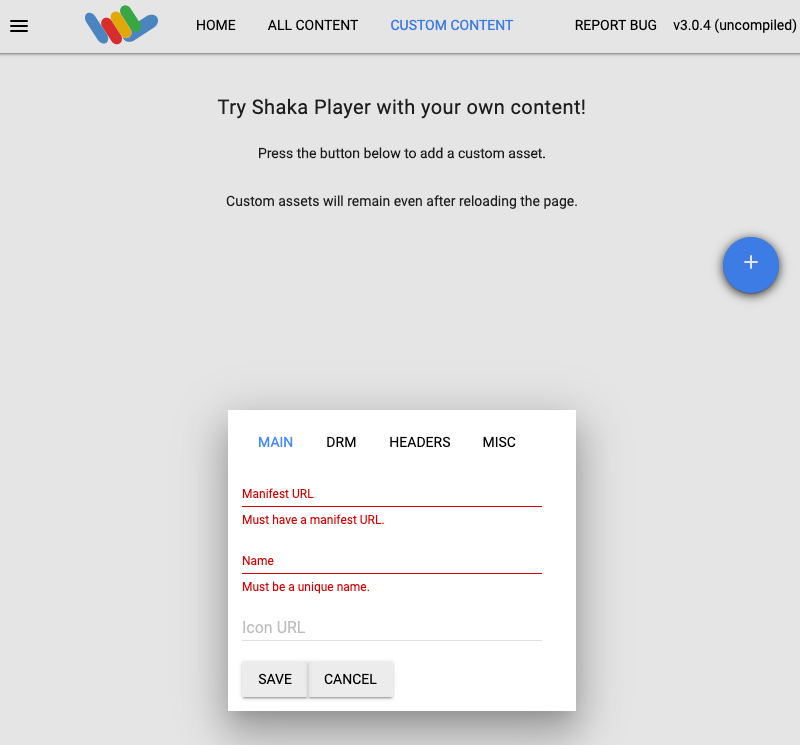
  8. מקלידים שם בתיבה שם.

  9. לוחצים על Save.

  10. לוחצים על הפעלה.

תבנית בדיקה תופעל כשידור חי.

סרטון עם דפוס בדיקה

יצירת אירוע בערוץ

כדי ליצור אירוע בערוץ, משתמשים בשיטה projects.locations.channels.events.create. בדוגמה הבאה מוסיפים את הלוח כאירוע בערוץ בשידור החי.

אם נכס הלוח לא מוכן (שתי שניות אחרי תחילת ההפעלה של האירוע), יוצג מסך שחור עד שנכס הלוח יהיה מוכן.

REST

לפני שמשתמשים בנתוני הבקשה, צריך להחליף את הנתונים הבאים:

  • PROJECT_NUMBER: מספר הפרויקט שלכם. הוא מופיע בשדה מספר הפרויקט בדף הגדרות IAM. Google Cloud
  • LOCATION: המיקום שבו הערוץ נמצא. צריך להשתמש באחד מהאזורים הנתמכים.
    הצגת מיקומים
    • us-central1
    • us-east1
    • us-east4
    • us-west1
    • us-west2
    • northamerica-northeast1
    • southamerica-east1
    • asia-east1
    • asia-east2
    • asia-south1
    • asia-northeast1
    • asia-southeast1
    • australia-southeast1
    • europe-north1
    • europe-west1
    • europe-west2
    • europe-west3
    • europe-west4
  • CHANNEL_ID: מזהה מוגדר על ידי המשתמש של הערוץ
  • EVENT_ID: מזהה שהוגדר על ידי המשתמש לאירוע
  • ASSET_ID: המזהה שהוגדר על ידי המשתמש לנכס הלוח

כדי לשלוח את הבקשה צריך להרחיב אחת מהאפשרויות הבאות:

אתם אמורים לקבל תגובת JSON שדומה לזו:

{
  "name": "projects/PROJECT_NUMBER/locations/LOCATION/channels/CHANNEL_ID/events/EVENT_ID",
  "createTime": CREATE_TIME,
  "updateTime": UPDATE_TIME,
  "slate": {
    "duration": "60s",
    "asset": "projects/PROJECT_NUMBER/locations/LOCATION/assets/ASSET_ID"
  },
  "executeNow": "true",
  "state": "PENDING"
}

בודקים את השידור החי כדי לוודא שהלוח הוכנס. אפשר גם לבדוק שהערך של state באירוע הוא SUCCEEDED (ראו קבלת פרטי אירועים בערוץ).

כדי ליצור לוח שידורים ארוך, מסירים את השדה duration מהאובייקט slate. כדי להסיר לוח ארוך, יוצרים אירוע של חזרה לשידור התוכנית בערוץ.