Cloud Multicast resource model and topologies
This page provides an overview of the resource model and supported topologies for Cloud Multicast.
For more information about the specific properties of each resource, see Multicast API reference.
For information about the Identity and Access Management (IAM) roles and permissions for Cloud Multicast resources, see the permissions reference.
Cloud Multicast resource model
The following sections describe the Google Cloud resources that are required for administering Cloud Multicast, producing multicast traffic, and consuming multicast traffic.
For diagrams that illustrate the Cloud Multicast resource model in different configuration scenarios, see multicast topologies and additional deployment patterns.
Overview of the Cloud Multicast resource model
The following table describes the resources that are required to use Cloud Multicast and who manages them. For more information about a type of resource, see its corresponding section.
| Resource types | Description |
|---|---|
| Multicast domains and group ranges
Managed by A multicast administrator |
Resources that you use to administer Cloud Multicast:
A domain can contain one or more group ranges. |
| Multicast producer configurations
Managed by Either the multicast administrator or a multicast producer network administrator, depending on the multicast topology. |
Resources that you configure to enable multicast producers in a given VPC network to send multicast traffic for a given domain and one or more group ranges. These resources must be in the same project as the multicast domain and group range resources. |
| Multicast consumer configurations
Managed by Either the multicast administrator or a multicast consumer network administrator, depending on the multicast topology. |
Resources that you configure to enable multicast consumers in a given VPC network to receive multicast traffic for a given domain and one or more group ranges. These resources can be in the same project as the multicast domain and group range resources or in a different project. |
Multicast domains
The following table describes the resources that multicast administrators use to create and manage Cloud Multicast infrastructure.
For information about creating these resources, see Create multicast domains.
| Resource | Scope | Description |
|---|---|---|
| Multicast domain group (optional) | Global |
A container for logically grouping two related domains together that can help you achieve high availability for your multicast infrastructure. When two domains are part of a domain group, Google Cloud places the infrastructure for each domain in two different high availability shards. Additionally, for configurations that use a domain group, Google Cloud automatically creates a compact placement policy that can optionally be applied to new or existing multicast consumer instances. When applied, Compute Engine tries to place the instance as close as possible to the infrastructure for the multicast domain in the corresponding zone. |
| Multicast domain | Global | Represents a reliability domain in the multicast administrator VPC network, where each domain uses separate infrastructure to distribute multicast traffic. Multicast domains help create infrastructure redundancy if producers send the same traffic to multicast group IP addresses in different domains. Multicast domains provide higher availability when configured as part of a domain group. The multicast administrator also sets the network topology to use for Cloud Multicast when creating a domain. |
| Multicast domain activation | Zonal | Represents the infrastructure that distributes multicast traffic. When you activate a multicast domain in a zone, Google Cloud provisions infrastructure for your domain in that zone. The infrastructure runs in a tenant project and VPC network that is managed by Google. |
Multicast group ranges
The following table describes the resources that multicast administrators use to create and manage multicast group IP address ranges.
For information about creating these resources, see Create multicast group ranges.
| Resource | Scope | Description |
|---|---|---|
| Multicast group range | Global | A unique multicast group IP address range in the multicast administrator VPC network that is associated with a specific multicast domain. A domain can contain one or more multicast group ranges. The administrator network manages multicast group IP addresses to ensure that there is no overlap between multiple domains. Multicast groups must use a Class D IP address range ( The multicast group range also provides a way to control access to multicast groups. You can configure the set of Google Cloud projects that can use the group range. For more information, see Create a multicast group range. |
| Multicast group range activation | Zonal | Enables multicast producers and consumers to start using a multicast group IP address range in a given zone. |
Multicast producer configurations
The following table describes the resources that must be configured to enable multicast producers in a given VPC network to send multicast traffic as a source for one or more multicast group ranges.
For information about creating these resources, see Enable a VPC network to produce multicast traffic.
| Resource | Scope | Description |
|---|---|---|
| Multicast producer association | Zonal | For a given multicast domain, this resource associates a multicast producer VPC network with the domain in a specific zone. In other words, it adds the network to a domain and zone as a multicast producer network. A multicast producer association is required in each zone that contains multicast producers. Additionally, you must create the producer association before you can create the group producer activation. |
| Multicast group producer activation | Zonal | For a given multicast group range, this resource allows multicast producers to begin sending
traffic to a group from a specific zone. In other words, it
activates a multicast producer VPC network for a group range and zone.
A multicast group producer activation is required for each multicast group range and zone in which you want to produce multicast traffic. |
Multicast consumer configurations
The following table describes the resources that must be configured to enable multicast consumers in a given VPC network to receive multicast traffic for one or more multicast group ranges.
For information about creating these resources, see Enable a VPC network to consume multicast traffic. Additionally, you must follow the steps to configure IGMP for multicast consumer instances.
If the same network hosts multicast producers and consumers, then the multicast consumer associations and activations must be created after the multicast producer associations and activations.
| Resource | Scope | Description |
|---|---|---|
| Multicast consumer association | Zonal | For a given multicast domain, this resource associates a multicast consumer VPC network with the domain in a specific zone. In other words, it adds the network to a domain and zone as a multicast consumer network. A multicast consumer association is required in each zone that contains multicast consumers. Additionally, you must create the consumer association before you can create the group consumer activation. |
| Multicast group consumer activation | Zonal | For a given multicast group range, this resource allows multicast consumers to begin receiving
traffic for a group in a specific zone. In other words, it
activates a multicast consumer VPC network for a group range and zone.
A multicast group consumer activation is required for each multicast group range and zone in which you want to consume multicast traffic. |
Cloud Multicast topologies
This section describes the topologies that the multicast administrator can configure for Cloud Multicast.
Overview of Cloud Multicast topologies
When you create a multicast domain, you must choose one of the following topologies. You can't change the topology after creating the domain. If your use case requires or might later require hosting multicast producers and consumers in different VPC networks, ensure that you configure the Network Connectivity Center (NCC) star topology.
| Topology | Description |
|---|---|
| Single VPC network topology | If multicast producers and consumers are always in the same VPC network, use the single VPC network topology. This topology uses a single network to manage multicast domains and group ranges and to host multicast producers and consumers. Multicast traffic is sent and received only within the network. |
| NCC star topology |
If your use case requires multicast producers and consumers to be in different VPC networks, use the NCC star topology. This topology uses separate VPC networks1 that are part of the same NCC hub as follows:
This topology enables both unicast and multicast connectivity between the networks in the center group and the networks in the edge group. However, it doesn't establish connectivity between networks in the edge group, which means that multicast consumer networks can't communicate with each other. When using this topology, consider the following:
In this topology, you can control access to the domain through accepting or rejecting VPC spokes to or from the hub. For more information about NCC, see the NCC documentation. |
Single VPC network topology
The diagrams in this section describe the single VPC network topology for Cloud Multicast.
Multicast traffic in the single VPC network topology
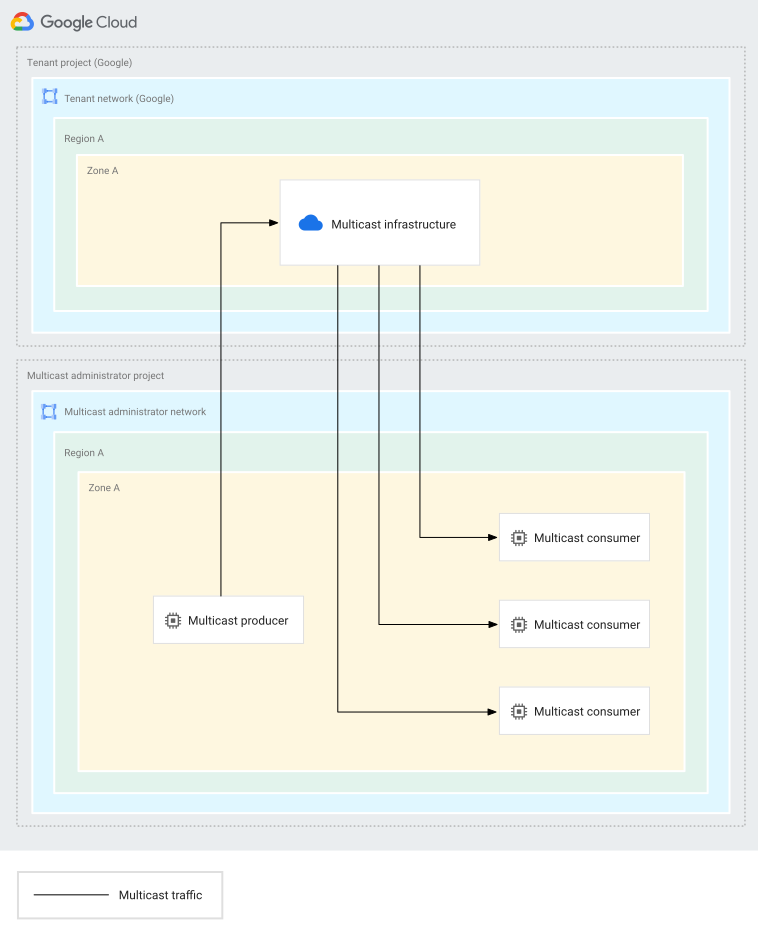
The following diagram illustrates multicast traffic in the single VPC network topology.
In this basic example, a multicast producer sends traffic to multicast consumers in the same zone. You can expand this topology by configuring cross-zone multicast distribution or redundant multicast domains.
Resource configuration for the single VPC network topology
This diagram illustrates the Cloud Multicast resources that you must configure to achieve the multicast connectivity that's described in the previous section.
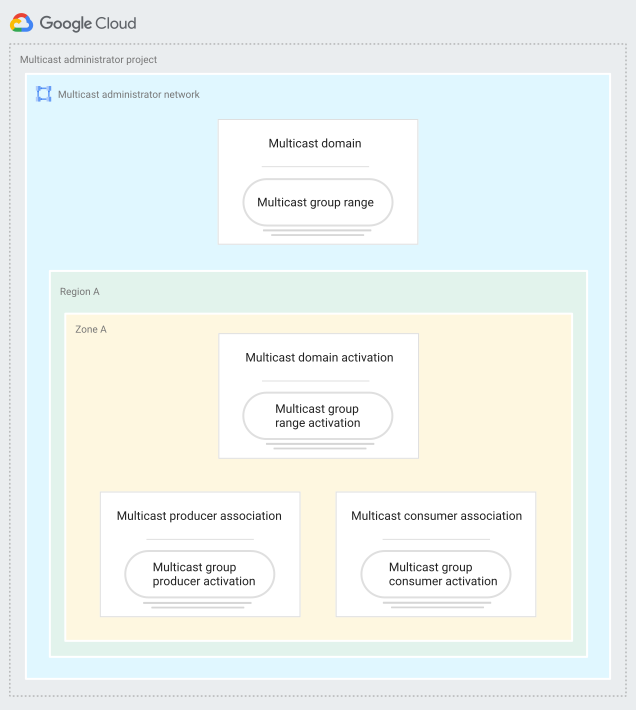
The following table describes the resource configurations in the preceding diagram.
| Resource types | Configuration |
|---|---|
| Multicast domains and group ranges |
A multicast domain with one or more group ranges are created in the VPC network and are activated in zone A. |
| Multicast producer configurations |
Resources that allow the multicast producer to send traffic from zone A:
|
| Multicast consumer configurations |
Resources that allow the multicast consumers to receive traffic in zone A:
|
NCC star topology
The diagrams in this section describe the NCC star topology for Cloud Multicast.
Multicast traffic in the star topology
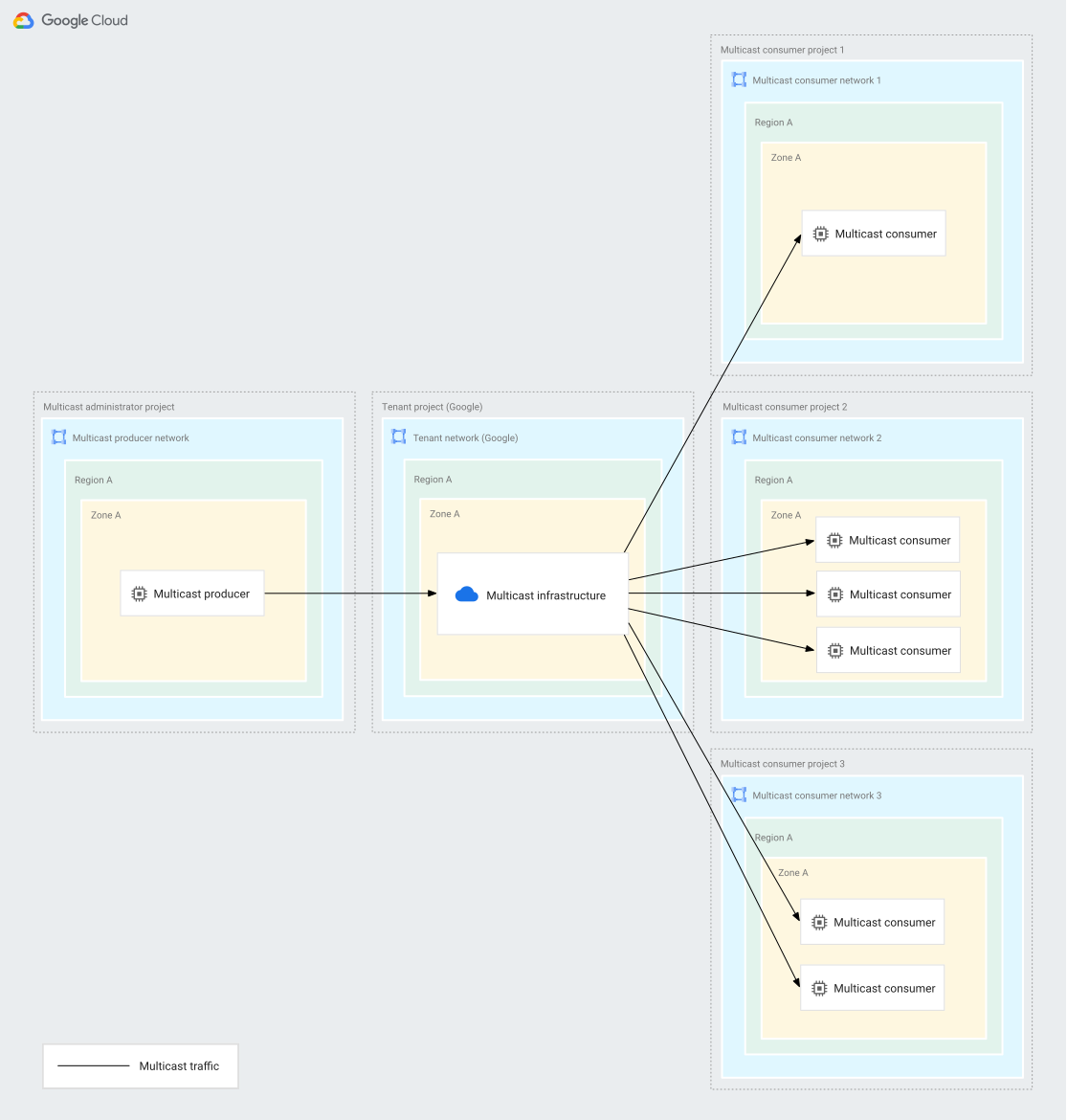
The following diagram illustrates multicast traffic in the NCC star topology.
In this basic example, a multicast producer sends traffic to multicast consumers in the same zone in different VPC networks. You can expand this topology by configuring cross-zone multicast distribution or redundant multicast domains, or adding more multicast producer networks.
Resource configuration for the star topology
The following diagram illustrates the network and Cloud Multicast resources that you must configure to achieve the multicast connectivity that's described in the previous section.
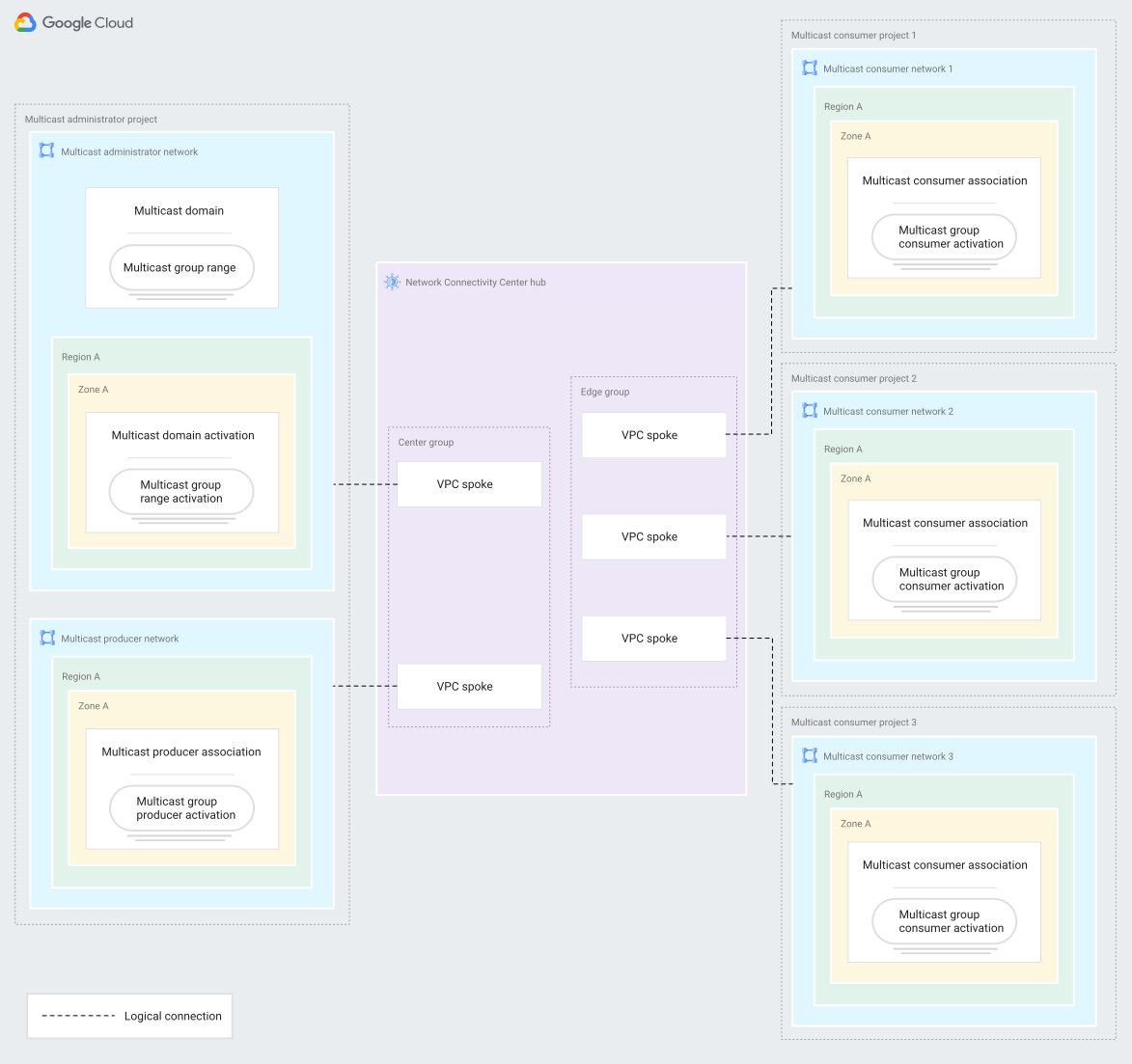
The following table describes the resource configurations in the preceding diagram.
| Resource types | Configuration |
|---|---|
| Multicast domains and group ranges |
A multicast administrator VPC network is a center spoke on the hub and contains a multicast domain with one or more group ranges that are activated in zone A. The multicast domain is configured with the NCC topology setting and the specific hub to use. |
| Multicast producer configurations |
A multicast producer VPC network is a center spoke on the hub and contains resources that allow the multicast producer to send traffic from zone A:
|
| Multicast consumer configurations |
Three multicast consumer VPC networks are edge spokes on the hub and each contain resources that allow multicast consumers to receive traffic in zone A:
|
Additional deployment patterns
This section describes additional deployment patterns that you can follow when configuring Cloud Multicast in either the single VPC network or NCC star topology. You can use any combination of these deployment patterns.
Cross-zone multicast
This section includes diagrams that illustrate cross-zone multicast traffic and the corresponding configuration requirements.
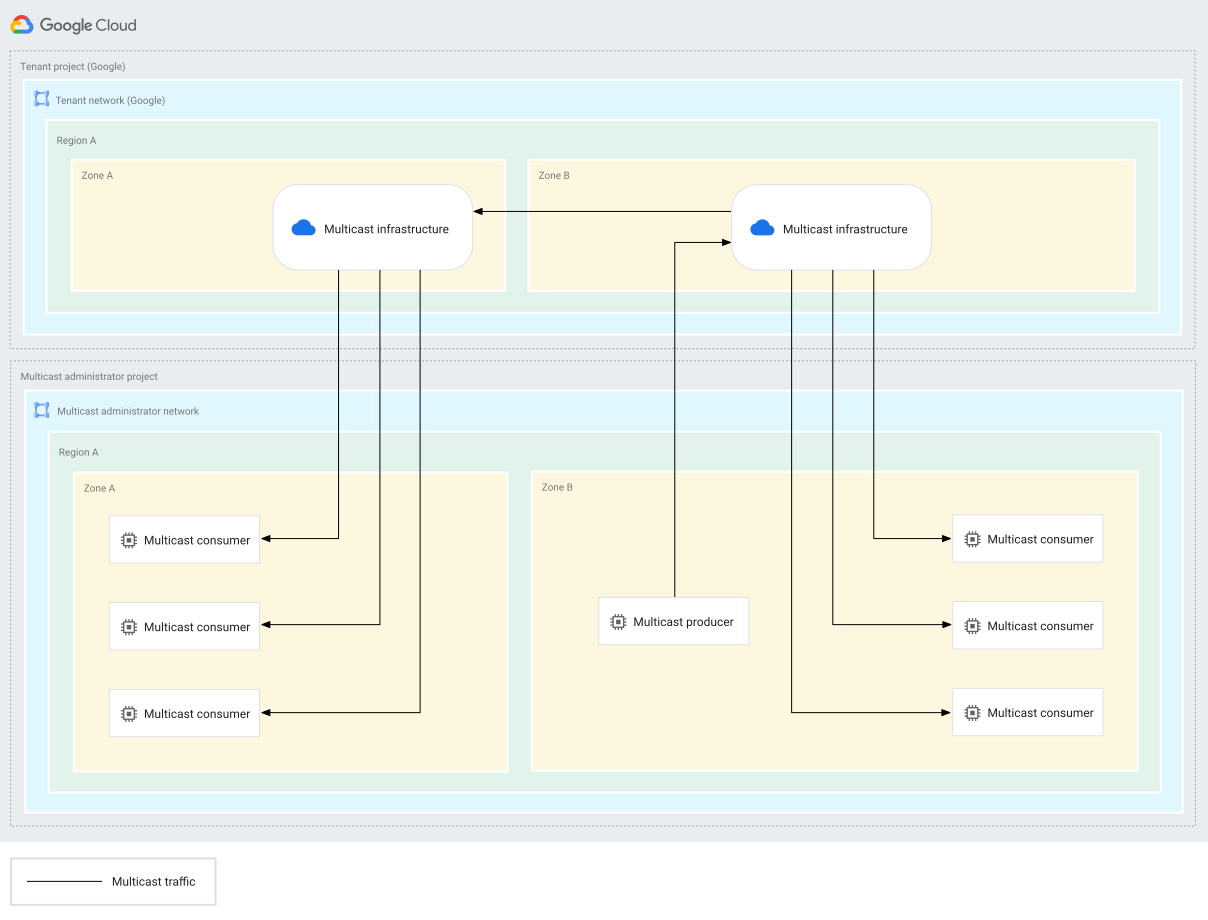
Cross-zone multicast traffic
The following diagram illustrates cross-zone multicast traffic in a single VPC network topology. You can also configure cross-zone multicast traffic when using the NCC star topology.
In this example, a multicast producer in zone B sends traffic to multicast consumers in both zone A and zone B.
Resource configuration for cross-zone multicast
This diagram illustrates the multicast resources that you must configure to achieve the cross-zone multicast connectivity that's described in the previous section.
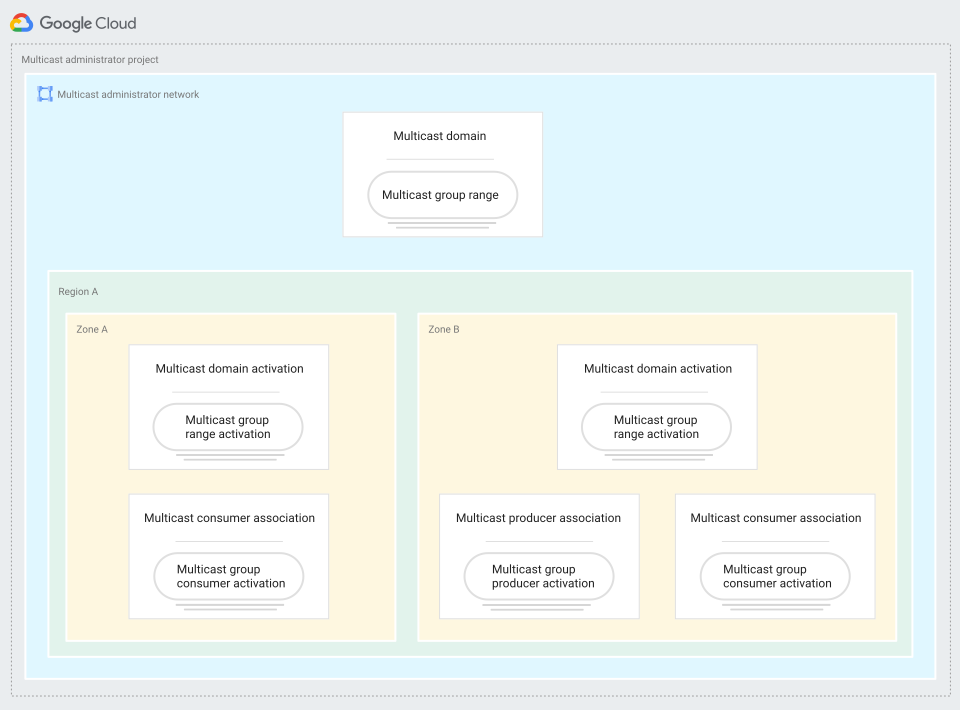
The following table describes the resource configurations in the preceding diagram. This configuration requires that you configure several resources in each zone where multicast producers or consumers send or receive traffic.
| Resource types | Configuration |
|---|---|
| Multicast domains and group ranges |
A multicast domain and one or more group ranges are created in the VPC network and are activated in both zone A and zone B. |
| Multicast producer configurations |
Resources that allow the multicast producer to send traffic from zone B:
|
| Multicast consumer configurations |
Resources that allow multicast consumers to receive traffic in zone A:
Resources that allow multicast consumers to receive traffic in zone B:
|
Redundant multicast domains
This section includes diagrams that illustrate sending multicast traffic through redundant multicast domains and the corresponding configuration requirements.
Multicast traffic through redundant domains
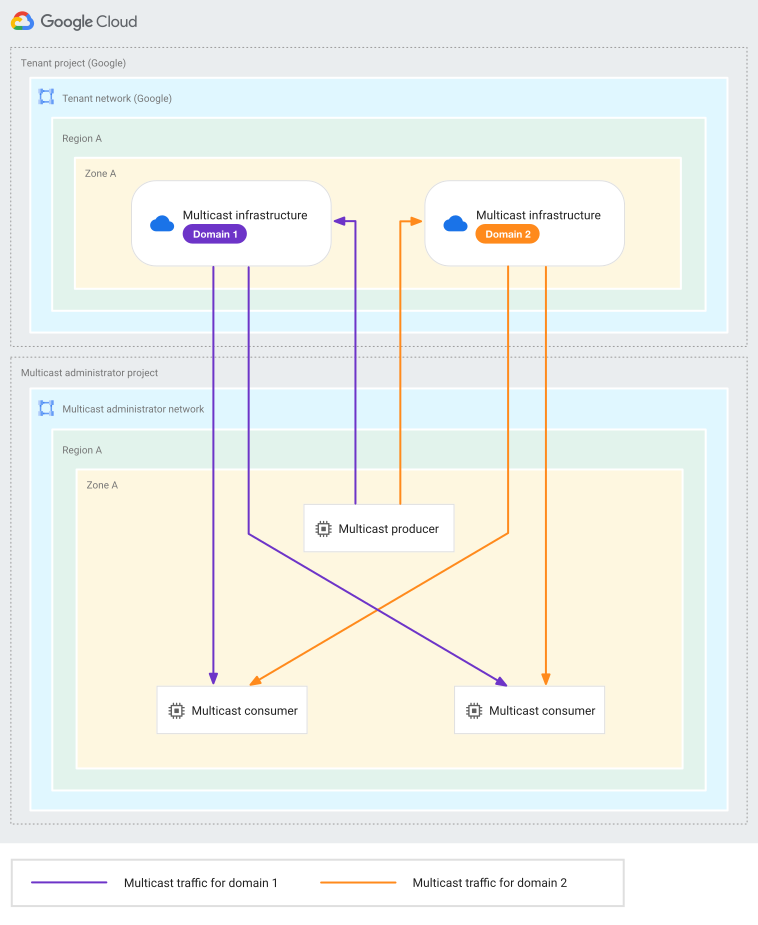
The following diagram illustrates redundant multicast domains in a single VPC network topology. You can also configure redundant domains when using the NCC star topology.
In this example, a multicast producer sends traffic to multicast consumers in the same zone through redundant multicast infrastructure that corresponds to two separate multicast domains.
Resource configuration for redundant domains
This diagram illustrates the multicast resources that you must configure to achieve the redundant multicast connectivity that's described in the previous section.
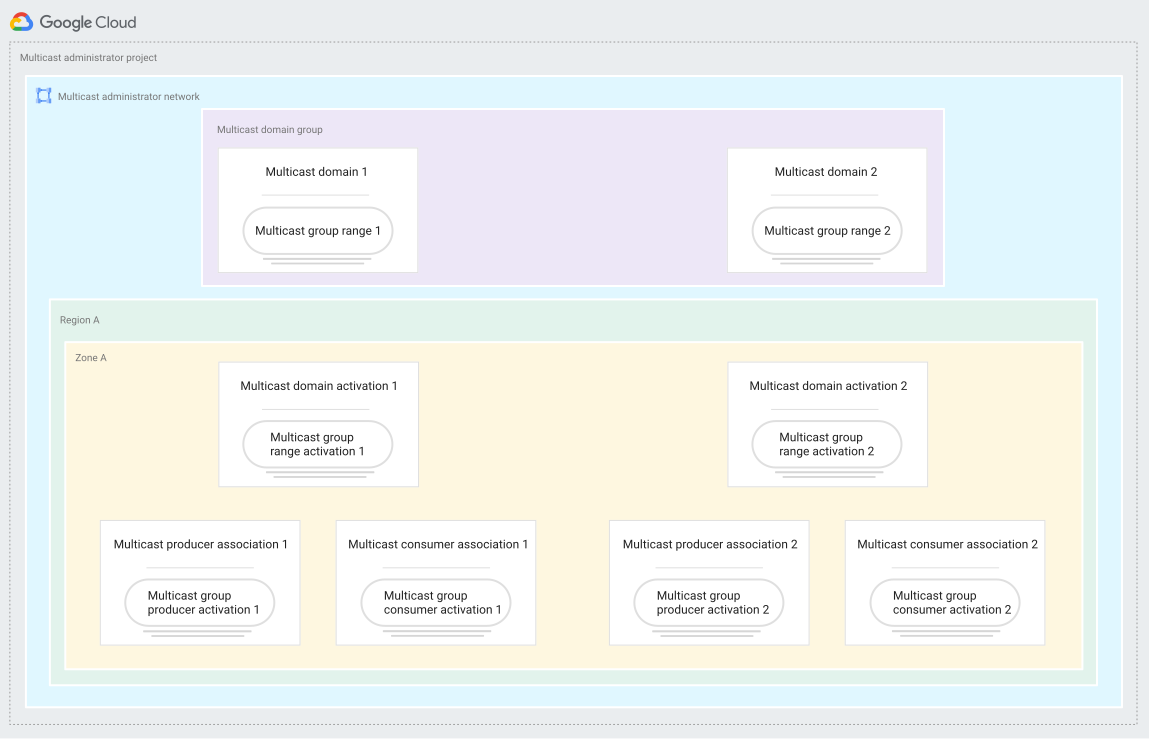
The following table describes the resource configurations in the preceding diagram. To use redundant multicast domains, you must create redundant configurations for each resource type.
| Resource types | Configuration |
|---|---|
| Multicast domains and group ranges |
Resources for redundant multicast domains:
|
| Multicast producer configurations |
Resources that allow the multicast producer to send traffic through multicast domain 1 from zone A:
Resources that allow the multicast producer to send traffic through multicast domain 2 from zone A:
|
| Multicast consumer configurations |
Resources that allow multicast consumers to receive traffic through multicast domain 1 in zone A:
Resources that allow the multicast consumer to receive traffic through multicast domain 2 in zone A:
|
Shared VPC
You can optionally use Shared VPC to separate network resources in a host project from compute resources in a service project. For more information, see the Shared VPC overview.
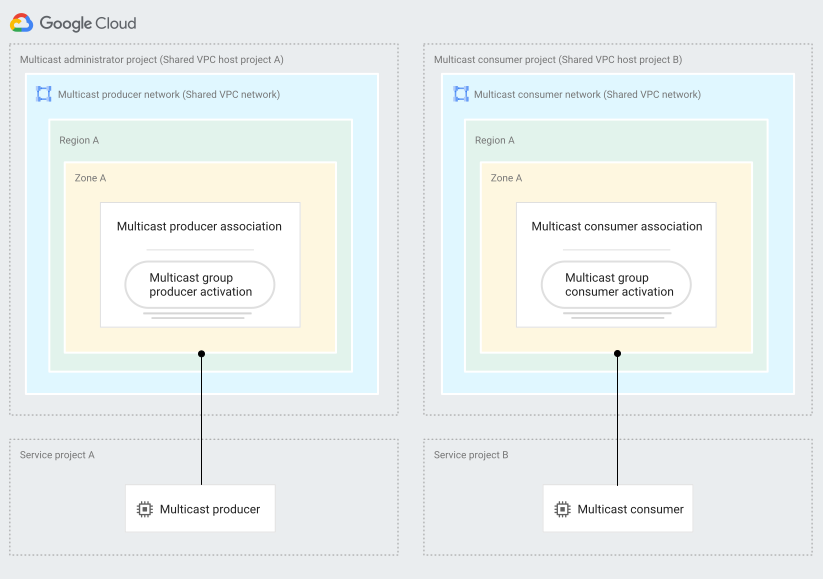
The following diagram illustrates an example configuration:
- Host project A contains a shared VPC network with multicast producer configurations. Service project A contains a multicast producer instance that is created in the shared network.
- Host project B contains a shared VPC network with multicast consumer configurations. Service project B contains a multicast consumer instance that is created in the shared network.