


Lakehouse for Apache Iceberg היא פלטפורמת Lakehouse מנוהלת של אגם נתונים ב-Google Cloud. בבסיס של Lakehouse נמצא קטלוג זמן הריצה, שירות מטא-נתונים מנוהל לחלוטין, בלי שרת (serverless), שמשמש כמקור האמת היחיד לנתונים שלכם. ריכוז המטא-נתונים מאפשר למנועי עיבוד שונים – כולל Apache Spark, Apache Flink, Apache Hive ו-BigQuery – לשתף טבלאות בצורה חלקה בלי לשכפל קבצים.
כדי לחבר את מנועי השאילתות למאגר המטא-נתונים, צריך להגדיר לקוח באמצעות נקודת קצה (endpoint) כמו קטלוג REST של Apache Iceberg. הוא משמש כממשק ניהול בקטלוג של זמן הריצה של Lakehouse לטיפול במטא-נתונים של הטבלה, תוך הסתמכות על Cloud Storage לאחסון המטא-נתונים הבסיסיים וקבצי הנתונים.
יכולות עיקריות
בתור רכיב מרכזי של Lakehouse, קטלוג זמן הריצה של Lakehouse מספק כמה יתרונות לניהול ולניתוח נתונים, כולל ארכיטקטורה ללא שרת, יכולת פעולה הדדית של מנועים עם ממשקי API פתוחים, חוויית משתמש מאוחדת וניתוח, סטרימינג ו-AI עם ביצועים גבוהים כשמשתמשים בו עם BigQuery. מידע נוסף על ההטבות האלה זמין במאמר מה זה Lakehouse?
איך Lakehouse משתלב עם Google Cloud
כדי להבין איך Lakehouse מנהל את הנתונים שלכם, כדאי לעיין במידע על האופן שבו ארכיטקטורת Lakehouse for Apache Iceberg משתלבת עם Google Cloud שירותים. ב-Apache Iceberg, הנתונים לא מאוחסנים בטבלאות מונוליטיות. במקום זאת, הוא משתמש בארכיטקטורה שכבתית של קובצי מטא-נתונים כדי לארגן את קובצי הנתונים במבנה טבלה מגובש עם תמיכה בעסקאות ACID.
בתרשים הבא מוצג איך מנועי חישוב כמו Managed Service for Apache Spark משתמשים בקטלוג של זמן הריצה של Lakehouse כדי לנהל מטא-נתונים של טבלאות, לקרוא ולכתוב קבצי נתונים בפורמט Parquet ישירות ב-Cloud Storage.
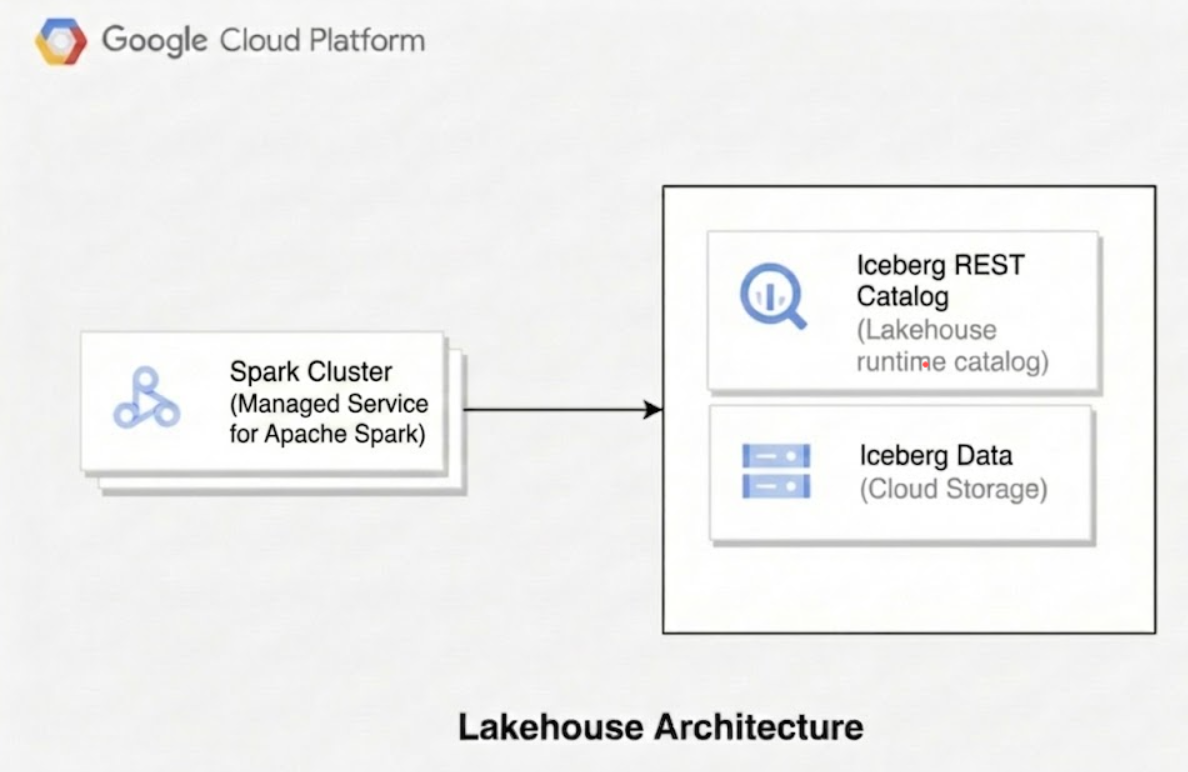
כשמשתמשים ב-Lakehouse for Apache Iceberg, הארכיטקטורה הטכנית מורכבת משלוש שכבות נפרדות:
שכבת הקטלוג:
- מושג הליבה של Iceberg: הקטלוג שומר את המצב הנוכחי של הטבלה על ידי שמירת מצביע לקובץ המטא-נתונים האחרון. השכבה הזו מאפשרת עמידה בדרישות ACID ובידוד עסקאות, כדי להבטיח שפעולות כתיבה שמתבצעות בו-זמנית לא יפריעו זו לזו.
- הטמעה של Lakehouse: הקטלוג של זמן הריצה של Lakehouse משמש כשירות metastore אזורי ברמה העליונה. במסגרת השירות הזה, אתם יוצרים קטלוגים נפרדים כדי לנהל את ההיררכיה של הנתונים. מנועי שאילתות של לקוחות מתחברים לקטלוגים האלה באמצעות סוגים ספציפיים של קטלוגים של נקודות קצה, כמו נקודת הקצה של קטלוג REST של Apache Iceberg. מאגר המטא-נתונים מנהל את אישורי העסקאות, הקצאת הרשאות לגישה לאחסון והקצאת מצביעים בקטלוגים.
שכבת מטא-נתונים:
- מושג מרכזי ב-Iceberg: השכבה הזו עוקבת אחרי מבנה הטבלה, תמונות המצב ומיקומי הקבצים באמצעות היררכיה של שלושה סוגי קבצים:
- קבצי מטא-נתונים: מאחסנים את הסכימה של הטבלה, את מפרט החלוקה למחיצות ויומן של מצביעים של תמונת מצב.
- רשימות מניפסטים: מייצגות תמונה אחת של הטבלה על ידי קיבוץ של אוסף קובצי מניפסט.
- קבצי מניפסט: מעקב אחרי נתונים ברמת הקובץ הבודד, אחסון של נתיבי קבצים, פרטי מחיצות וסטטיסטיקות ברמת העמודה, למשל ספירת שורות וערכי מינימום ומקסימום, שמשמשים לאופטימיזציה של שאילתות ולגיזום מחיצות.
- הטמעה של Lakehouse: בתוך מאגר קטלוג, מארגנים את הנתונים במרחבי שמות לוגיים (בדומה למערכי נתונים) ובטבלאות. לכל טבלה, קטלוג זמן הריצה של Lakehouse יוצר ומנהל את היררכיית המטא-נתונים הבסיסית של Iceberg, החל מקובץ
metadata.jsonבסיס שמפנה לרשימות המניפסטים ולקובצי המניפסטים. הקטלוג של זמן הריצה של Lakehouse שומר את הקבצים האלה ישירות במיקום האחסון המיועד במחסן הנתונים.
- מושג מרכזי ב-Iceberg: השכבה הזו עוקבת אחרי מבנה הטבלה, תמונות המצב ומיקומי הקבצים באמצעות היררכיה של שלושה סוגי קבצים:
שכבת נתונים:
- מושג הליבה של Iceberg: הרכיב הזה הוא האחסון הבסיסי שבו נמצאים רשומות הנתונים הגולמיים בפועל, בדרך כלל בפורמטים אופטימליים של קבצים פתוחים מבוססי-עמודות או מבוססי-שורות, כמו Parquet, ORC או Avro.
- הטמעה של Lakehouse: כשמגדירים מיקומי מחסני נתונים ב-Cloud Storage (
bl://אוgs://), קובצי הנתונים הפיזיים שאליהם יש הפניה בטבלאות מאוחסנים בצורה מאובטחת בקטגוריות. קטלוג זמן הריצה של Lakehouse מנהל את הגישה באמצעות העברת הרשאות גישה לאחסון (credential vending), ומנפיק אסימוני גישה לזמן קצר ישירות למנועי הלקוח. כך מנועים יכולים לקרוא ולכתוב קובצי נתונים בצורה מאובטחת בלי לדרוש הרשאות IAM רחבות וישירות בקטגוריות הבסיסיות.
איך Lakehouse מטמיע את Apache Iceberg REST Catalog API
הקטלוג של Lakehouse runtime מטמיע את Apache Iceberg REST Catalog API בקוד פתוח כדי לנהל מרחבי שמות וטבלאות. בנוסף, הוא מספק extensions API במיוחד לניהול הקטלוג.
מנועי שאילתות של לקוחות יוצרים אינטראקציה עם מאגר המטא-נתונים באמצעות ממשקי API סטנדרטיים של קטלוג REST. פרטים על משאבים ונקודות קצה ב-Google Cloud מופיעים בהפניית API בארכיטקטורת REST של Lakehouse.
אפשר ליצור, להגדיר ולנהל את המשאבים האלה באמצעות מסוףGoogle Cloud , ה-CLI של gcloud, API בארכיטקטורת REST או Terraform. מידע נוסף זמין בדפים הבאים:
- ניהול משאבים בקטלוג REST של Iceberg
- ניהול טבלאות בקטלוג REST של Iceberg ב-Lakehouse
- שימוש ב-Terraform עם Lakehouse
תאימות של מנוע השאילתות והגדרות
כדי לנתח ולנהל נתונים בקטלוג של זמן הריצה של Lakehouse, אפשר לחבר מנועי שאילתות שונים של קוד פתוח ושל ארגונים. בהתאם לארכיטקטורה הקיימת ולדרישות עומס העבודה, אפשר לבחור מתוך כמה מנועים נתמכים ולהגדיר את נקודת הקצה המתאימה של הקטלוג.
מנועי חיפוש נתמכים
קטלוג זמן הריצה של Lakehouse תואם למספר מנועי שאילתות, כולל (בין היתר) Apache Spark, Apache Flink, Apache Hive ו-Trino. בטבלה הבאה מופיעים קישורים למסמכי תיעוד של כל מנוע:
| מנוע | מסמכי תיעוד |
|---|---|
| Apache Spark | שימוש עם Apache Spark |
| Apache Hive | שימוש עם Spark ועם קטלוג Hive |
| Apache Flink | שימוש עם Apache Flink |
| Trino | שימוש ב-Trino |
סוגי קטלוגים והגדרות של נקודות קצה
כשמגדירים מנועי לקוח להתחבר למאגר המטא-נתונים של קטלוג זמן הריצה של Lakehouse, בוחרים נקודת קצה ספציפית של catalog, כמו נקודת הקצה של Apache Iceberg REST catalog או נקודת הקצה של Apache Hive. האפשרות הכי טובה תלויה בתרחיש לדוגמה, כפי שמוצג בטבלה הבאה:
| תרחיש לדוגמה | המלצה |
|---|---|
| משתמשים חדשים בקטלוג של זמן הריצה של Lakehouse שרוצים שמנוע הקוד הפתוח שלהם יוכל לגשת לנתונים ב-Cloud Storage וצריכים יכולת פעולה הדדית עם מנועים אחרים, כולל BigQuery ו-AlloyDB ל-PostgreSQL. | משתמשים ב נקודת הקצה של קטלוג Apache Iceberg REST. |
| משתמשים שמריצים עומסי עבודה של Apache Hive או Spark שמסתמכים על הממשק של Hive Metastore ורוצים שירות metastore מנוהל לחלוטין. | משתמשים בנקודת הקצה של קטלוג Apache Hive. |
| משתמשים קיימים בקטלוג של זמן הריצה של Lakehouse שיש להם טבלאות נוכחיות שנוצרו באמצעות קטלוג Apache Iceberg בהתאמה אישית לנקודת הקצה של BigQuery. | להמשיך להשתמש בקטלוג Apache Iceberg מותאם אישית לנקודת הקצה של BigQuery, אבל להשתמש בקטלוג Apache Iceberg REST לזרימות עבודה חדשות. |
מגבלות על קטלוג זמן הריצה של Lakehouse
ההגבלות הכלליות הבאות חלות על טבלאות בקטלוג של Lakehouse runtime כשמבצעים עליהן שאילתות דרך BigQuery. יכול להיות שלנקודות קצה (endpoints) ספציפיות בקטלוג (כמו Apache Iceberg REST או Apache Hive) יש הגבלות נוספות.
ניהול טבלאות
- יש תמיכה בטבלאות Apache Iceberg V2 (GA) ובטבלאות V3 (Preview). אין תמיכה בטבלאות Iceberg V1. לפני שמשתמשים בטבלאות קיימות בגרסה 1 עם קטלוג של סביבת ההרצה Lakehouse, צריך לשדרג אותן לגרסה נתמכת. מידע נוסף זמין במאמר בנושא שדרוג טבלאות Iceberg V1 ל-V2.
- טבלאות בקטלוג של Lakehouse בזמן ריצה לא תומכות בפעולות של שינוי שם או בהצהרת
ALTER TABLE ... RENAME TOSpark SQL. - אין תמיכה באשכולות בטבלאות בקטלוג של Lakehouse runtime.
- טבלאות בקטלוג של Lakehouse runtime לא תומכות בשמות עמודות גמישים.
קטלוג זמן הריצה של Lakehouse לא תומך בתצוגות של מסדי נתונים או של metastore.
הקטלוג של Lakehouse runtime לא תומך בתצוגות של Apache Iceberg.
שאילתות
- יכול להיות שביצועי השאילתות בטבלאות בקטלוג של Lakehouse runtime ממנו מופעל מנוע BigQuery יהיו איטיים בהשוואה לשאילתות של נתונים בטבלאות BigQuery רגילות. באופן כללי, מהירות השאילתה צריכה להיות שווה למהירות קריאת הנתונים מ-Cloud Storage.
- הרצת סימולציה של שאילתה ב-BigQuery שמשתמשת בטבלה בקטלוג של זמן הריצה של Lakehouse עשויה לדווח על גבול תחתון של 0 בייטים של נתונים, גם אם השורות מוחזרות. התוצאה הזו מתקבלת כי אי אפשר לקבוע את כמות הנתונים שעוברים עיבוד מהטבלה עד להרצת השאילתה המלאה. הפעלת השאילתה כרוכה בעלות על עיבוד הנתונים האלה.
- אי אפשר להפנות לטבלה בקטלוג של Lakehouse בזמן ריצה בשאילתת טבלת תווים כלליים לחיפוש.
API ומטא-נתונים
- אי אפשר להשתמש בשיטה
tabledata.listכדי לאחזר נתונים מטבלאות בקטלוג של Lakehouse runtime. במקום זאת, אפשר לשמור את תוצאות השאילתה בטבלה ב-BigQuery, ואז להשתמש בשיטהtabledata.listבטבלה הזו. - אי אפשר להציג נתונים סטטיסטיים של נפח האחסון בטבלאות בקטלוג של Lakehouse runtime.
מכסות ומגבלות
- הטבלאות בקטלוג של זמן הריצה של Lakehouse ב-BigQuery כפופות לאותם מכסות ומגבלות כמו טבלאות רגילות.
הבדלים במאגר המטא-נתונים של BigLake (קלאסי)
ההבדלים העיקריים בין קטלוג זמן הריצה של Lakehouse לבין מאגר המטא-נתונים של BigLake (קלאסי) כוללים את ההבדלים הבאים:
- קטלוג זמן הריצה של Lakehouse תומך בשילוב ישיר עם מנועי קוד פתוח כמו Spark, מה שעוזר לצמצם את הכפילות כשמאחסנים מטא-נתונים ומריצים משימות. אפשר לגשת ישירות לטבלאות בקטלוג של Lakehouse runtime ממנועי קוד פתוח שונים ומ-BigQuery.
- הקטלוג של Lakehouse runtime תומך בנקודת הקצה של קטלוג Apache Iceberg REST, אבל מאגר המטא-נתונים של BigLake (קלאסי) לא תומך בה.