


本教程介绍了如何通过 MaxDiffusion,使用 Google Kubernetes Engine (GKE) 上的张量处理单元 (TPU) 应用 SDXL 图片生成模型。在本教程中,您将从 Hugging Face 下载模型,然后使用运行 MaxDiffusion 的容器将其部署到 Autopilot 或 Standard 集群上。
如果您在部署和应用 AI/机器学习工作负载时需要利用托管式 Kubernetes 的精细控制、自定义、可伸缩性、弹性、可移植性和成本效益,那么本指南是一个很好的起点。如果您需要统一的托管式 AI 平台来经济高效地快速构建和应用机器学习模型,我们建议您试用我们的 Vertex AI 部署解决方案。
背景
通过 MaxDiffusion 使用 GKE 上的 TPU 来应用 SDXL,您可以构建一个可用于生产用途的强大服务解决方案,具备托管式 Kubernetes 的所有优势,包括经济高效、可伸缩性和更高的可用性。本部分介绍本教程中使用的关键技术。
Stable Diffusion XL (SDXL)
Stable Diffusion XL (SDXL) 是 MaxDiffusion 支持用于推理的一种潜在 diffusion 模型 (LDM)。对于生成式 AI,您可以使用 LDM 基于文本描述生成高质量的图片。LDM 对于图片搜索和图片标注等应用非常有用。
SDXL 支持使用分片注解进行单主机或多主机推理。这样一来,SDXL 就可以跨多个机器进行训练和运行,从而提高效率。
如需了解详情,请参阅 Stability AI 仓库提供的生成模型和 SDXL 论文。
TPU
TPU 是 Google 定制开发的应用专用集成电路 (ASIC),用于加速机器学习和使用 TensorFlow、PyTorch 和 JAX 等框架构建的 AI 模型。
使用 GKE 中的 TPU 之前,我们建议您完成以下学习路线:
- 了解 Cloud TPU 系统架构中的当前 TPU 版本可用性。
- 了解 GKE 中的 TPU。
本教程介绍如何提供 SDXL 模型。GKE 在单主机 TPU v5e 节点上部署模型,并根据模型要求配置 TPU 拓扑,以低延迟响应提示。在本指南中,该模型使用具有 1x1 拓扑的 TPU v5e 芯片。
MaxDiffusion
MaxDiffusion 是一系列用 Python 和 Jax 编写的参考实现,其中包含在 XLA 设备(包括 TPU 和 GPU)上运行的各种潜在 diffusion 模型。MaxDiffusion 是 Diffusion 项目的起点,可用于研究和生产。
如需了解详情,请参阅 MaxDiffusion 仓库。
目标
本教程适用于使用 JAX 的生成式 AI 客户、SDXL 的新用户或现有用户、任何机器学习工程师、MLOps (DevOps) 工程师或是对使用 Kubernetes 容器编排功能应用 LLM 感兴趣的平台管理员。
本教程介绍以下步骤:
- 根据模型特征创建一个具有推荐 TPU 拓扑的 GKE Autopilot 或 Standard 集群。
- 构建 SDXL 推理容器映像。
- 在 GKE 上部署 SDXL 推理服务器。
- 通过 Web 应用应用模型并与之交互。
架构
本部分介绍本教程中使用的 GKE 架构。该架构包括 GKE Autopilot 集群或 Standard 集群,用于预配 TPU 和托管 MaxDiffusion 组件。GKE 使用这些组件来部署和应用模型。
下图展示了此架构的组件:
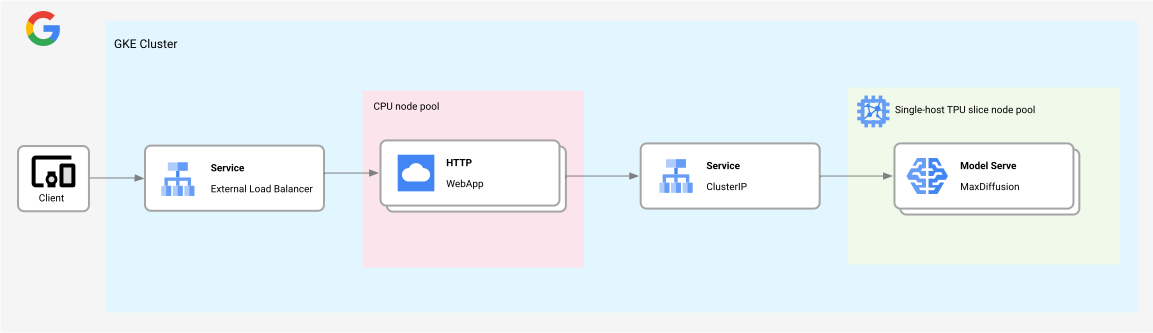
此架构包括以下组件:
- GKE Autopilot 或 Standard 区域级集群。
- 一个单主机 TPU 切片节点池,用于在 MaxDiffusion 部署中托管 SDXL 模型。
- 具有
ClusterIP类型的负载均衡器的 Service 组件。此 Service 会将入站流量分布到所有MaxDiffusion HTTP副本。 - 具有外部
LoadBalancerService 的WebApp HTTP服务器,该 Service 分配入站流量并将模型服务流量重定向到ClusterIPService。
准备工作
- 登录您的 Google Cloud 账号。如果您是 Google Cloud的新用户, 请创建一个账号,以评估我们的产品在 实际场景中的表现。新客户还可获享 $300 赠金,用于 运行、测试和部署工作负载。
-
In the Google Cloud console, on the project selector page, select or create a Google Cloud project.
Roles required to select or create a project
- Select a project: Selecting a project doesn't require a specific IAM role—you can select any project that you've been granted a role on.
-
Create a project: To create a project, you need the Project Creator role
(
roles/resourcemanager.projectCreator), which contains theresourcemanager.projects.createpermission. Learn how to grant roles.
-
Verify that billing is enabled for your Google Cloud project.
Enable the required APIs.
Roles required to enable APIs
To enable APIs, you need the Service Usage Admin IAM role (
roles/serviceusage.serviceUsageAdmin), which contains theserviceusage.services.enablepermission. Learn how to grant roles.-
In the Google Cloud console, on the project selector page, select or create a Google Cloud project.
Roles required to select or create a project
- Select a project: Selecting a project doesn't require a specific IAM role—you can select any project that you've been granted a role on.
-
Create a project: To create a project, you need the Project Creator role
(
roles/resourcemanager.projectCreator), which contains theresourcemanager.projects.createpermission. Learn how to grant roles.
-
Verify that billing is enabled for your Google Cloud project.
Enable the required APIs.
Roles required to enable APIs
To enable APIs, you need the Service Usage Admin IAM role (
roles/serviceusage.serviceUsageAdmin), which contains theserviceusage.services.enablepermission. Learn how to grant roles.-
确保您在项目中拥有以下一个或多个角色: roles/container.admin、roles/iam.serviceAccountAdmin、roles/artifactregistry.admin、roles/cloudbuild.builds.editor
检查角色
-
在 Google Cloud 控制台中,前往 IAM 页面。
转到 IAM - 选择项目。
-
在主账号 列中,找到标识您或您所属群组的所有行。如需了解您属于哪些群组,请与您的 管理员联系。
- 对于指定或包含您的所有行,请检查角色 列,查看 角色列表是否包含所需角色。
授予角色
-
在 Google Cloud 控制台中,前往 IAM 页面。
转到 IAM - 选择项目。
- 点击 授予访问权限。
-
在新的主账号 字段中,输入您的用户标识符。 这通常是 Google 账号的电子邮件地址。
- 点击选择角色,然后搜索相应角色。
- 如需授予其他角色,请点击 添加其他角色 ,然后添加其他各个角色。
- 点击 Save (保存)。
-
- 检查您是否有足够的 TPU v5e PodSlice Lite 芯片配额。 在本教程中,您将使用按需实例。
准备环境
在本教程中,您将使用 Cloud Shell 来管理Google Cloud上托管的资源。Cloud Shell 预安装有本教程所需的软件,包括 kubectl 和 gcloud CLI。
如需使用 Cloud Shell 设置您的环境,请按照以下步骤操作:
在 Google Cloud 控制台中,点击 Google Cloud 控制台中的
 激活 Cloud Shell 以启动 Cloud Shell 会话。此操作会在 Google Cloud 控制台的底部窗格中启动会话。
设置默认环境变量:
gcloud config set project PROJECT_ID
gcloud config set billing/quota_project PROJECT_ID
export PROJECT_ID=$(gcloud config get project)
export CLUSTER_NAME=CLUSTER_NAME
export CLUSTER_VERSION=CLUSTER_VERSION
export REGION=REGION_NAME
export ZONE=ZONE
替换以下值:
- PROJECT_ID:您的 Google Cloud 项目 ID。
- CLUSTER_NAME:您的 GKE 集群的名称。
- CLUSTER_VERSION:GKE 版本。您必须指定支持 TPU Trillium (v6e) 的 GKE 版本。 如需了解详情,请参阅 验证 GKE 中的 TPU 可用性。
- REGION_NAME:GKE
集群、Cloud Storage 存储桶和 TPU 节点所在的区域。该区域包含可以使用 TPU v5e 机器类型的可用区(例如
us-west1、us-west4、us-central1、us-east1、us-east5或europe-west4)。 - (仅限标准集群)ZONE:可以使用 TPU 资源的可用区(例如
us-west4-a)。对于 Autopilot 集群,您无需指定可用区,只需指定区域。
克隆示例代码库并打开教程目录:
git clone https://github.com/GoogleCloudPlatform/kubernetes-engine-samples
cd kubernetes-engine-samples/ai-ml/maxdiffusion-tpu
WORK_DIR=$(pwd)
gcloud artifacts repositories create gke-llm --repository-format=docker --location=$REGION
gcloud auth configure-docker $REGION-docker.pkg.dev
创建和配置 Google Cloud 资源
请按照以下说明创建所需的资源。
创建 GKE 集群
您可以在 GKE Autopilot 或 Standard 集群中的 TPU 上应用 SDXL。我们建议您使用 Autopilot 集群获得全托管式 Kubernetes 体验。如需选择最适合您的工作负载的 GKE 操作模式,请参阅选择 GKE 操作模式。
Autopilot
在 Cloud Shell 中,运行以下命令:
gcloud container clusters create-auto ${CLUSTER_NAME} \
  --project=${PROJECT_ID} \
  --location=${REGION} \
  --release-channel=rapid \
  --cluster-version=${CLUSTER_VERSION}
GKE 会根据所部署的工作负载的请求,创建具有所需 CPU 和 TPU 节点的 Autopilot 集群。
配置
kubectl以与您的集群通信:gcloud container clusters get-credentials ${CLUSTER_NAME} --location=${REGION}
Standard
创建使用适用于 GKE 的工作负载身份联合的区域级 GKE Standard 集群。
gcloud container clusters create ${CLUSTER_NAME} \
    --enable-ip-alias \
    --machine-type=n2-standard-4 \
    --num-nodes=2 \
    --workload-pool=${PROJECT_ID}.svc.id.goog \
    --location=${REGION}
集群创建可能需要几分钟的时间。
运行以下命令来为集群创建节点池:
gcloud container node-pools create maxdiffusion-tpu-nodepool \
  --cluster=${CLUSTER_NAME} \
  --machine-type=ct5lp-hightpu-1t \
  --num-nodes=1 \
  --location=${REGION} \
  --node-locations=${ZONE} \
  --spot
GKE 会创建具有
1x1拓扑和一个节点的 TPU v5e 节点池。如需创建具有不同拓扑的节点池,请了解如何 规划 TPU 配置。 请务必更新本教程中的示例值,例如
cloud.google.com/gke-tpu-topology和google.com/tpu。配置
kubectl以与您的集群通信:gcloud container clusters get-credentials ${CLUSTER_NAME} --location=${REGION}
构建 SDXL 推理容器
请按照以下说明为 SDXL 推理服务器构建容器映像。
打开
build/server/cloudbuild.yaml清单:执行构建并创建推理容器映像。
cd $WORK_DIR/build/server
gcloud builds submit . --region=$REGION
输出包含容器映像的路径。
部署 SDXL 推理服务器
在本部分中,您将部署 SDXL 推理服务器。本教程将使用 Kubernetes Deployment 来部署该服务器。Deployment 是一个 Kubernetes API 对象,可让您运行在集群节点中分布的多个 Pod 副本。
探索
serve_sdxl_v5e.yaml清单。更新清单中的项目 ID。
cd $WORK_DIR
perl -pi -e 's|PROJECT_ID|PROJECT_ID|g' serve_sdxl_v5e.yaml
perl -pi -e 's|REGION|REGION_NAME|g' serve_sdxl_v5e.yaml
应用清单:
kubectl apply -f serve_sdxl_v5e.yaml输出类似于以下内容:
deployment.apps/max-diffusion-server created验证模型的状态:
kubectl get deploy --watch输出类似于以下内容:
NAME                          READY   UP-TO-DATE   AVAILABLE   AGE
stable-diffusion-deployment   1/1     1            1           8m21s
检索
ClusterIP地址:kubectl get service max-diffusion-server输出包含
ClusterIP字段。请记下 CLUSTER-IP 值。验证 Deployment:
 export ClusterIP=CLUSTER_IP
 kubectl run curl --image=curlimages/curl \
    -it --rm --restart=Never \
    -- "$ClusterIP:8000"
将 CLUSTER_IP 替换为您前面记下的 CLUSTER-IP 值。输出类似于以下内容:
{"message":"Hello world! From FastAPI running on Uvicorn with Gunicorn."}
pod "curl" deleted
查看 Deployment 的日志:
kubectl logs -l app=max-diffusion-serverDeployment 完成后,输出类似于以下内容:
2024-06-12 15:45:45,459 [INFO] __main__: replicate params:
2024-06-12 15:45:46,175 [INFO] __main__: start initialized compiling
2024-06-12 15:45:46,175 [INFO] __main__: Compiling ...
2024-06-12 15:45:46,175 [INFO] __main__: aot compiling:
2024-06-12 15:45:46,176 [INFO] __main__: tokenize prompts:2024-06-12 15:48:49,093 [INFO] __main__: Compiled in 182.91802048683167
INFO:     Started server process [1]
INFO:     Waiting for application startup.
INFO:     Application startup complete.
部署 webapp 客户端
在本部分中,您将部署 webapp 客户端以应用 SDXL 模型。
探索
build/webapp/cloudbuild.yaml清单。执行构建并在
build/webapp目录下创建客户端容器映像。cd $WORK_DIR/build/webapp gcloud builds submit . --region=$REGION输出包含容器映像的路径。
打开
serve_sdxl_client.yaml清单:修改清单中的项目 ID:
cd $WORK_DIR
perl -pi -e 's|PROJECT_ID|PROJECT_ID|g' serve_sdxl_client.yaml
perl -pi -e 's|ClusterIP|CLUSTER_IP|g' serve_sdxl_client.yaml
perl -pi -e 's|REGION|REGION_NAME|g' serve_sdxl_client.yaml
应用清单:
kubectl apply -f serve_sdxl_client.yaml检索
LoadBalancerIP 地址:kubectl get service max-diffusion-client-service输出包含
LoadBalancer字段。请记下 EXTERNAL-IP 值。
使用网页与模型交互
通过网络浏览器访问以下网址:
http://EXTERNAL_IP:8080将 EXTERNAL_IP 替换为前面记下的
EXTERNAL_IP值。使用聊天界面与 SDXL 交互。添加提示,然后点击提交。例如:
Create a detailed image of a fictional historical site, capturing its unique architecture and cultural significance
输出是一个模型生成的图片,类似于以下示例:

清理
为避免因本教程中使用的资源导致您的 Google Cloud 账号产生费用,请删除包含这些资源的项目,或者保留项目但删除各个资源。
删除项目
- 在 Google Cloud 控制台中,前往 管理资源 页面。
- 在项目列表中,选择要删除的项目,然后点击删除。
- 在对话框中输入项目 ID,然后点击 关闭以删除项目。
逐个删除资源
保留项目但删除各个资源,如以下部分所述。运行以下命令并按照提示操作:
gcloud container clusters delete ${CLUSTER_NAME} --location=${REGION}
后续步骤
- 使用其他 TPU 拓扑配置本教程。如需详细了解其他 TPU 拓扑,请参阅规划 TPU 配置。
- 在您在本教程中克隆的示例仓库中探索 MaxDiffusion 推理服务器示例代码。
- 详细了解 GKE 中的 TPU。
- 探索 JetStream GitHub 仓库。
- 探索 Vertex AI Model Garden。